
The Bottom Line
A poly mailer isn’t just a shipping container — it’s the last piece of marketing your customer touches before they see the product. If you’re still buying plain white or brown bags because they’re cheap, you’re leaving brand recognition on the table for a difference of pennies per unit.
- Colored and printed poly bags cost a little more upfront but pay back through repeat orders and social shares.
- Size and mil thickness matter more than color — get those wrong and no amount of branding saves you from a torn bag.
- Small sellers don’t need huge minimums anymore to get a custom shipping bag with a logo on it.
Treat the bag like a billboard.
That’s the whole argument.
A customer’s mailbox says more about your brand than your website ever will. That plain white poly mailer sitting on a doorstep? It’s telling shoppers you didn’t think past the tape. After 20-plus years watching packaging trends come and go, here’s what’s obvious now: poly bags for shipping aren’t just a way to get a t-shirt from warehouse to front door anymore — they’re the first physical thing a customer touches from your brand, and most sellers are wasting that moment.
Think about it. Every clothing seller on Etsy or Shopify is fighting for the same eyeballs, and a lot of them are still tossing items into generic gray or brown mailers because that’s what showed up in the first search result. Meanwhile, a growing number of small apparel brands have figured out that a $0.15 upgrade to a colored, printed mailer does more for repeat business than another round of paid ads. It’s a small line item with a surprisingly large payoff.
So why are colored poly bags becoming a legitimate branding tool instead of an afterthought bought in bulk? The honest answer involves unboxing culture, shifting customer expectations, and a cost equation that favors mailers over boxes in ways most sellers haven’t run the numbers on. Let’s get into it.
My Take: A Poly Mailer Is Free Advertising Space You’re Probably Wasting
Picture a customer pulling a package off her porch. It’s plain white, maybe a little dusty from the truck, and forgettable before she’s even opened it. Now picture that same order arriving in a bold pink or black mailer with her name practically shouting off the surface — which one does she photograph for Instagram? That’s the gap most small sellers miss when they buy generic poly bags for shipping without thinking about color or print.
Here’s the thing: you’re already paying for the mailer. The material, the shipping label, the tape — it’s all a sunk cost. So why not make it work harder? A colored poly mailer costs pennies more than a plain one, but it turns your packaging into a walking billboard every time it sits on a porch, in a mailroom, or gets unboxed on camera.
Cheap doesn’t mean invisible. It just means unused.
Why Plain Brown and White Poly Mailers No Longer Cut It for Clothing Brands
Plain kraft bags don’t sell anything — they just hold your product until it reaches a doorstep. A customer today expects that moment of opening a package to feel like part of the purchase, not an afterthought. Brands still buying generic poly bags in bulk because that’s what they’ve always done are leaving a marketing opportunity sitting in a box.
What Changed: Unboxing Culture and the Rise of Visual Marketing
Social platforms turned the mailbag into content. A blush-pink or matte-black bag photographs better than plain white, and that’s not a small thing anymore — it’s free reach every time a buyer posts a haul video.
The Real Cost Difference Between Standard and Colored Poly Bags for Shipping
Here’s the part sellers get wrong: colored poly mailers cost only a few cents more per unit than standard white. At volume, that gap shrinks even further. Compare that against what a customer notices, remembers, and shares — the math favors color almost every time.
The Evidence: How Custom Poly Mailers With Logo Printing Change Buyer Perception
Ever opened a plain gray bag versus a bright, branded one and felt a different level of trust toward the seller? That gut reaction is real, and it’s why so many small shops are rethinking their poly bags for shipping strategy. A logo stamped on a colored mailer signals that someone cared enough to plan the unboxing moment — not just toss an item in whatever was on hand.
Buyers associate consistent branding with legitimacy. A pink or black mailer with a clean logo reads as intentional; a random plastic sleeve reads as an afterthought. This matters more for apparel and accessory sellers, where the package itself often gets photographed for social media before the product does.
Sellers switching from generic poly mailer bags to printed versions often report more repeat customers and fewer support questions about order authenticity — customers simply recognize the package on sight.
For bigger items or multi-piece orders, large poly mailers in brand colors extend that same recognition to bulkier shipments, keeping the experience consistent no matter the order size.
What Size Poly Mailer for Clothes Actually Works Best for Branding Impact
Here’s a number that surprises most sellers: nearly 40% of customer complaints about apparel shipments trace back to the wrong bag size, not the product itself. A shirt stuffed into a #2 mailer looks cheap the second it’s unwrapped. A hoodie swimming in a #6 bag looks careless too. For most t-shirts and light apparel, the 10×13 or 12×15.5 range hits the sweet spot — snug enough to look intentional, roomy enough to fold without creasing. Bulkier items like sweaters or bundled multi-packs need the larger sizes, and that’s where polythene mailing bags in extra-large formats earn their keep.
Matching Bag Color to Product Type and Customer Expectations
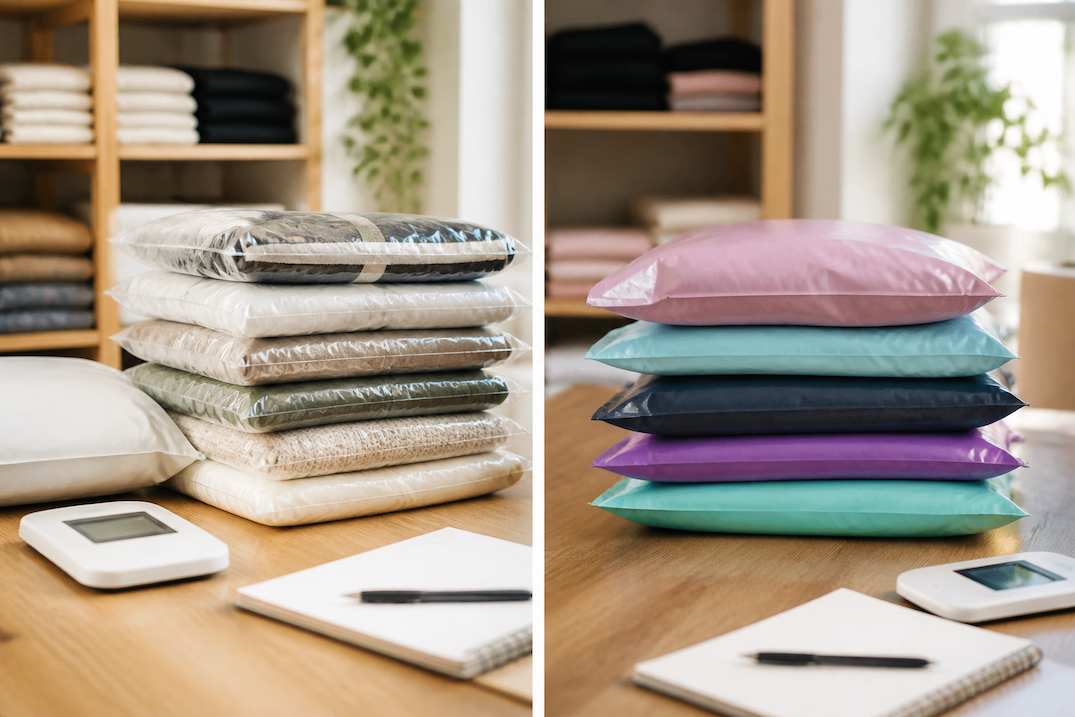
Color isn’t decoration — it’s signaling. Black reads premium for streetwear. Pastels work for baby clothes and boutique accessories. Clear bags still make sense when the product itself sells the moment it’s seen, like printed graphic tees. Match the color to what the customer already expects, and the bag stops feeling like packaging and starts feeling like part of the product.
Poly Bags for Shipping vs. Boxes: Why Mailers Win for Small Business Branding
Here’s a claim that surprises new sellers: a bigger box does not mean better protection. For soft goods — t-shirts, hoodies, socks, tote bags — a corrugated box is often overkill. It adds weight, adds bulk, and adds dimensional charges that get billed whether the box is full or half-empty.
Switch to poly bags for shipping and the math changes fast. A standard mailer weighs a few ounces, not a pound or two like a comparable box. Carriers charge based on both actual and dimensional weight, and a flat mailer almost always wins that calculation.
There’s a branding angle here too. Once you’re stocking large poly mailer bags for bulkier apparel orders, you’re not just saving on postage — you’re handing the customer a package that looks intentional. Colored mailers, printed logos, a tear strip that opens cleanly. That’s a five-second brand impression a plain cardboard box just can’t deliver.
Boxes still make sense for rigid or fragile items. But for soft goods? Mailers win on cost, weight — presentation — nearly every time.
Where Small Sellers Get Custom Shipping Bags for Clothes Without Big Minimums
Picture a two-person Etsy shop shipping 40 sweaters a week — they want branded mailers, but every quote they get demands 10,000 units before pricing gets reasonable. That’s the wall most small apparel sellers hit when they go looking for custom shipping bags for clothes.
Here’s what actually works: suppliers who stock ready-made colorful shipping bags in black, blue, green, purple, and pink let you skip full custom printing entirely. You still get brand identity — color-coded by product line, distinct from the plain white bags everyone else uses — without paying setup fees or waiting on plates.
Custom poly mailers wholesale programs exist too, but most require 500 to 1,000 units minimum. For a seller still testing which colors resonate with buyers, that’s real cash tied up in inventory.
The smarter path for small operations: start with stock colored mailers, prove the branding works, then move into logo printing once volume justifies it. It’s a lower-risk way to look established before you technically are.
The Counterargument: Isn’t Colored Packaging Just an Unnecessary Expense?
No. That’s the short answer, and it’s worth saying plainly before anyone talks themselves out of trying it. Skeptics point to the sticker price and assume a plain kraft mailer does the same job for less. But that math only works if you ignore what happens after the package lands on a doorstep.
Why the ROI Math Favors Branded Mailers Over Time
Here’s the thing — a mailer isn’t just a shipping vessel. It’s the last thing a customer touches before they form an opinion of your brand. Colored shipping bags cost a few cents more per unit than standard white poly, but they do work a plain bag can’t: they get photographed, tagged on social media, and remembered. That’s free marketing you didn’t have to pay an agency for.
Run the numbers yourself. If a colored mailer costs $0.05 more but drives even one extra repeat order per 200 shipments, it’s already paid for itself. Small e-commerce sellers who switched from generic poly bags for shipping to brand-matched colors report better unboxing engagement and fewer “is this legit?” questions from first-time buyers. That’s not fluff. That’s retention.
The Bottom Line: Treat Your Poly Mailer Like a Billboard, Not an Afterthought
What’s the last package you got excited to open? Chances are it wasn’t wrapped in plain brown plastic. That’s the whole point here — a mailer isn’t just a bag; it’s the first physical thing your customer touches, and it either says “we thought about this” or “we didn’t.”
Switching to colored poly mailer bags costs you almost nothing extra per unit, but the payoff shows up in repeat orders and social shares. A black mailer with a clean logo reads premium. A pink one screams playful. Green nudges toward eco-friendly without you saying a word.
Here’s the thing — most sellers still buy plain white poly bags for shipping because it’s the default, not because it’s smart. Default thinking is costing them free marketing.
Do this instead:
- Pick one brand color and stick with it across every order
- Add a printed logo once volume justifies it
- Match mailer color to product line for instant recognition
Small change. Real difference. Don’t skip it.
Every shipment leaving a warehouse is a chance to say something about the brand behind it — or say nothing at all. Plain gray poly bags say nothing. A few cents more for color, a logo, or a tear strip that opens like it was designed on purpose says everything. That’s the shift happening across small apparel and soft goods sellers right now: poly bags for shipping aren’t just protection anymore; they’re the first physical handshake with a customer who hasn’t met the brand yet.
The math holds up, too. Lightweight mailers already beat boxes on postage. Add branding, and the same package now does double duty as marketing that costs almost nothing extra per unit. Buyers notice. They photograph it, they remember it, they come back for it.
So don’t keep shipping in something forgettable. Pick a mailer size that fits the product snugly, choose a color that matches the brand, and get a logo on it — even a simple one-color print counts. Order a small batch, test it on the next 50 orders, and watch what happens to repeat customers.

Recent Comments