
Quick Picks
Cold garages and unheated warehouses wreck cheap tape fast. Here’s the short list before you dig into why:
- LUX Packing Tape (The Boxery): best overall cold-weather performer
- Scotch Heavy Duty Packaging Tape 8-Pack: best widely available runner-up
- Reinforced Filament Tape: best for heavy or dense cartons
- Water-Activated (Gummed) Tape: best tamper-evident cold seal
- 3M Scotch Heavy Duty Refill Rolls: best for high-volume dispensers
- Scotch General Purpose Packaging Tape: best budget backup roll
Twenty degrees outside and your tape pops off the box before it even hits the truck. Sound familiar? Cold weather doesn’t just slow down delivery trucks — it wrecks adhesive bonds, and most sellers never see it coming until a customer emails about a box that arrived split open with the packing slip hanging out the side. That’s a bad review waiting to happen, and it’s completely avoidable once you understand what’s happening at the molecular level with cheap tape in freezing temps.
Not all packing and shipping tape is built the same, and winter is where the differences show up fast. A roll that seals fine in a warm garage in July can turn brittle and refuse to stick once temps drop below 40°F. For Etsy, eBay, and Amazon sellers shipping through November, December, and January — peak season, no less — picking the wrong tape isn’t a minor inconvenience. It’s lost inventory, refunds, and angry buyers. Here’s what actually holds up when the mercury drops, and why some rolls fail you right when you need them most.
Why Cold Weather Breaks Your Tape Seal (And What to Look For Instead)
Picture a fulfillment garage in January — the door’s open for two minutes while orders get loaded, and the temp inside drops to 40°F. A seller grabs a roll of bargain-bin tape, seals a box, and by the time it hits the carrier’s truck, the flap’s already curling up at the corner. That’s not bad luck. That’s chemistry working against you. Cold air stiffens adhesive before it ever gets a chance to grip the box.
How Temperature Drops Affect Adhesive Bond Strength
Most standard packing and shipping tape uses acrylic or hot-melt adhesive formulated to bond best between 50°F and 100°F. Below that range, the adhesive stops flowing into the cardboard’s surface fibers — it just sits on top. The result: weak tack, lifted corners, and seams that pop open mid-transit. Any of that sound familiar? If you’re shipping through a cold garage or an unheated warehouse dock all winter, standard tape is fighting you from day one.
Cold-Rated Tape vs. General Purpose Packaging Tape
General-purpose packaging tapes aren’t built for freezing loading docks — they’re built for average room conditions. Cold-rated tapes use rubber-based or specialty hot-melt adhesive that stays tacky well below freezing. Realistically, if you ship year-round in a climate that dips below 40°F, that’s the difference between a box that survives ground shipping and one that opens itself somewhere in transit.
Our Top 6 Picks for Cold Weather Packing and Shipping Tape
Cold air kills cheap adhesive. That’s the blunt truth after 25 years of watching boxes pop open in unheated trucks and garages. Not all packing tape holds up once temps drop below 50°F — the hot-melt formulas either stiffen up or lose their grip entirely.
1. LUX Packing Tape (The Boxery) — Best Overall Cold-Weather Performer
This is the roll we reach for first. Its hot-melt adhesive stays tacky in cold storage rooms and unheated warehouses, bonds instantly to kraft corrugated, and won’t yellow or crack over long shipments. For sellers moving winter inventory through freight or last-mile carrier networks, it’s the most dependable pick on this list.
2. Scotch Heavy Duty Packaging Tape 8-Pack — Best Widely Available Runner-Up
Solid performance and easy to find at big-box retailers when you’re in a pinch.
3. Reinforced Filament Tape — Best for Heavy or Dense Cartons
Fiberglass strands add pull strength for dense, awkward loads.
4. Water-Activated (Gummed) Tape — Best Tamper-Evident Cold Seal
Bonds mechanically into fiberboard rather than relying on surface stickiness, which matters a lot below freezing. Some sellers pair it with paper tape for an eco-friendly, tamper-evident seal.
5. 3M Scotch Heavy Duty Packaging Tape Refill Rolls — Best for High-Volume Dispensers
Good for shippers running dispensers daily.
6. Scotch General Purpose Packaging Tape — Best Budget Backup Roll
Fine for light, indoor sealing jobs.
Buying Packing Tape Locally vs. Ordering in Bulk Online
Ever stood in the checkout line holding two rolls of tape and wondered if there’s a smarter way to do this? For a seller shipping five packages a week, a quick store run works fine. For anyone shipping fifty or more, that habit turns into wasted gas and wasted afternoons.
What You’ll Actually Find at Walmart, Target, Dollar Tree, Walgreens, and Dollar General
Walk into any of these stores, and you’ll find single rolls or small two-packs — fine in a pinch, but not built for volume. Dollar Tree and Dollar General carry thin, low-tack rolls that split under cold, stiff boxes. Walgreens and CVS stock tape mainly as an afterthought near office supplies. Target and Walmart carry better name-brand rolls, but prices per roll run high once you’re buying weekly instead of once a season.
Why Bulk Wholesale Ordering Beats Repeated Store Runs for E-Commerce Sellers
Here’s the thing — sellers who ship consistently need bulk tape on hand, not a drawer full of half-used rolls. Ordering bulk tape by the case means fewer reorders, steadier pricing — no mid-order scramble to a store shelf that might be empty anyway. And when boxes are heavy or headed on a long freight or carrier route, heavy duty packing tape holds seals through cold, handling, and stacking better than anything grabbed off a drugstore rack.
Common Cold-Weather Sealing Mistakes That Cause Package Failures in Transit
Carriers report that roughly 1 in 5 damaged-package claims trace back to a seal that popped open mid-route — and cold weather makes that number climb fast. Below freezing, adhesive gets stiff and stops bonding on contact the way it does at room temp. Sellers who don’t adjust their taping habits for winter end up with flaps curling open somewhere between the truck and the front porch.
Skipping the H-Taping Method on Box Flaps
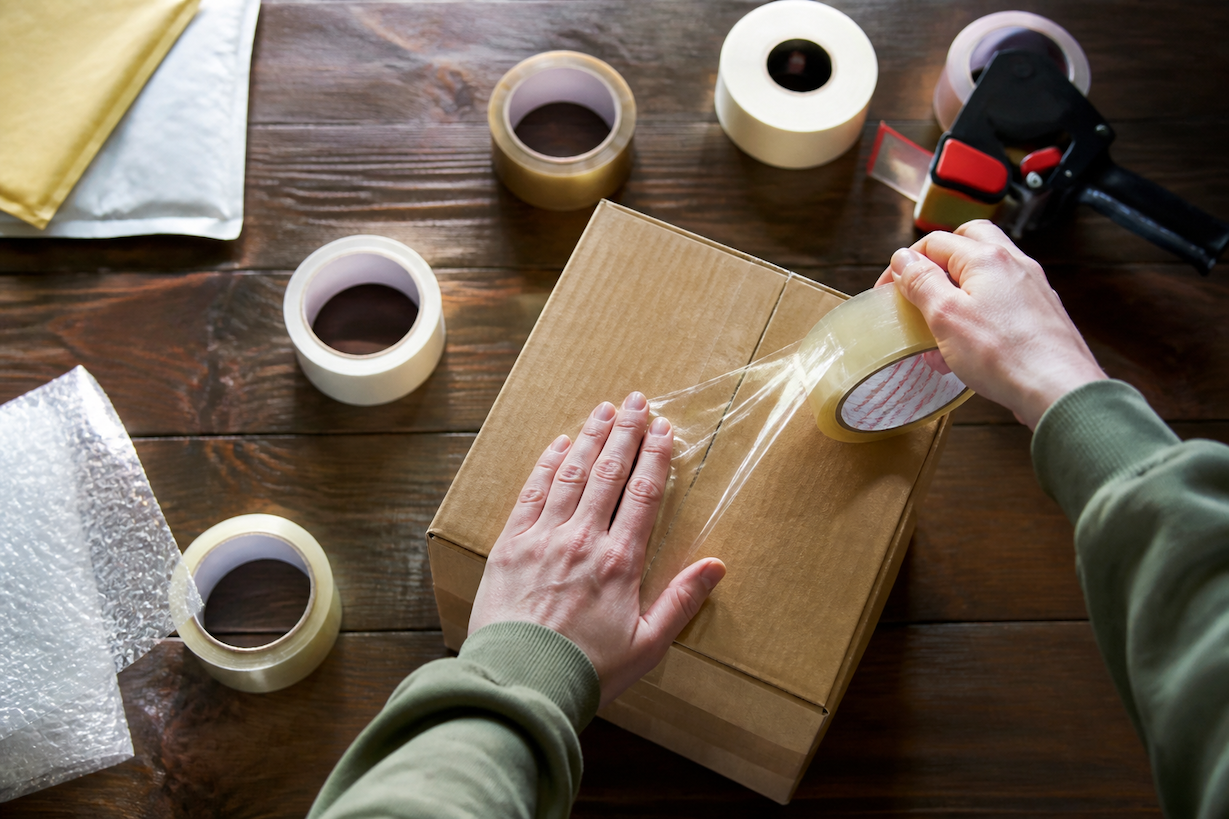
A single strip down the center seam might hold in July. In January, it won’t. The H-taping method — sealing the center seam plus both edge seams — gives you three points of adhesion instead of one, which matters when cold air is already working against the bond. If you’re shipping anything heavier than a few pounds, pair this method with heavy duty box tape rather than a thin all-purpose roll. Don’t forget to buy packing slips and shipping labels at the same time so your winter shipments stay organized and trackable.
Using Old or Improperly Stored Tape Rolls in Winter
Tape left in a cold garage or unheated warehouse dries out over time. Rolls stored below 60°F for weeks lose adhesive strength before you even cut the first strip. Keep rolls indoors, closer to room temperature, and rotate stock so nothing sits unused for a full season.
How to Choose the Right Shipping Tape for Your Winter Order Volume
Here’s a myth worth killing: thicker tape isn’t automatically better tape. Cold-weather sealing comes down to adhesive chemistry, not roll width — and plenty of sellers waste money buying the wrong thick roll when a properly rated hot-melt formula would’ve held up fine at 20 degrees.
Start by matching tape to your actual order volume. If you’re moving 50 packages a week, a standard 2-inch packaging tape handles most jobs. Once you’re pushing several hundred shipments during Q4, you need rolls built for a dispenser gun, not a handheld one — the constant tension changes wear out cheap adhesive fast.
Three factors matter more than brand name:
- Adhesive type — acrylic tape stays flexible below freezing; standard hot-melt can crack in cold trucks.
- Carton condition — dusty, cold corrugated needs stronger initial tack, since box packaging tape struggles to grip surfaces below 40°F.
- Roll length — longer rolls mean fewer changeovers during peak fulfillment days.
Realistically, if you’re shipping heavier holiday orders, pair thicker tape with reinforced edges. Skimping here is how boxes split open in transit — and that’s a return, not a sale.
Winter sealing failures rarely come down to bad luck — they come down to buying tape that wasn’t built for the cold — skipping the taping method that actually holds a box together. Grab-and-go rolls from a drugstore rack might work in July. In January, with a truck sitting at 20 degrees overnight, they won’t. That’s the whole case for switching to cold-rated packing and shipping tape and stocking enough of it before the temperature drops, not after a shipment comes back split open.
Small sellers running winter volume don’t need six different tape brands in a drawer. They need one reliable roll, ordered in bulk, that seals cold and stays sealed through transit. LUX Packing Tape earns the top spot here for exactly that reason — hot melt adhesive that grips in freezing warehouses, not just showroom temps.
Don’t wait for a damaged-box complaint to test this theory. Order a case of LUX Packing Tape now, run the H-taping method on every box, and head into peak season with seals that hold no matter what the thermostat says outside.



Recent Comments