
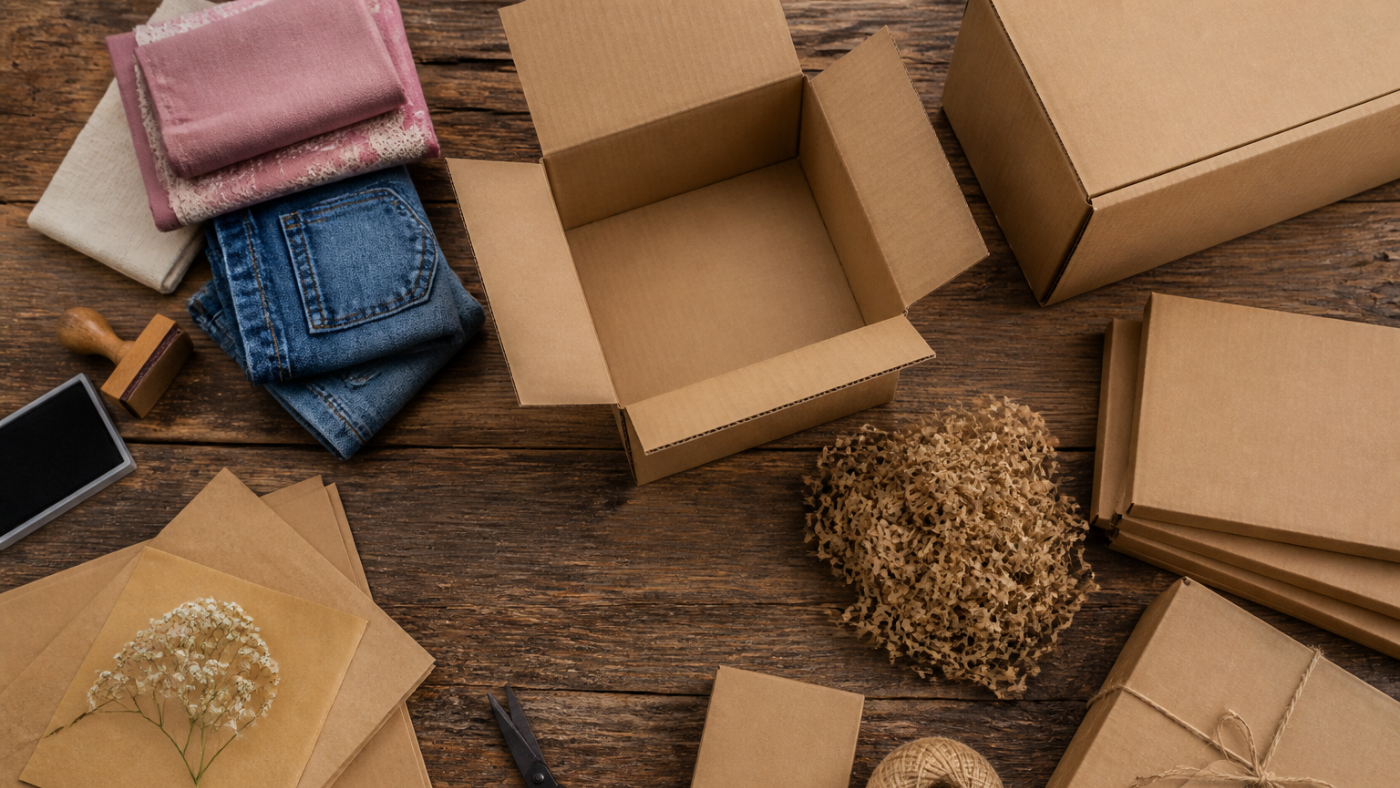
Key Takeaways
- Right-size every cardboard box order by product dimensions, not habit; moving from oversized cartons to close-fit corrugated boxes can cut shipping charges, void fill use, and shelf space at the same time.
- Compare recycled-content cardboard by strength, texture, and stack performance before buying in bulk; a cheaper box that crushes, bows, or slows packing usually costs more per order.
- Use flat corrugated mailers for books, apparel, prints, notes, and office goods when a standard cardboard box adds empty space and pushes dimensional pricing higher.
- Track cardboard packaging by four numbers: cost per order, damage rate, pack time, and storage footprint; those fast whether a box size like 8x8x8 or 20x20x20 is helping or hurting margin.
- Buy bulk cardboard box inventory in narrow size bands—small, medium, large, and extra only where sales justify it—so workspace doesn’t fill up with useless stock that ties up cash.
- Treat recycled cardboard as an operations choice, not just an eco claim; for marketplace sellers, the best corrugated packaging is the one that ships cleanly, stores flat, protects the product, and keeps reorder planning simple.
Shipping costs don’t rise by accident. They rise one bad package decision at a time—and for a marketplace seller, the wrong cardboard box can eat margin faster than a price cut ever will. A box that’s one or two inches too big, a stack that crushes in storage, a cheap buy that slows pack time: those small misses add up across 50, 200, or 1,000 orders.
That’s why recycled content has moved out of the feel-good category and into daily operations. Sellers who ship apparel, books, crafts, and handmade goods are looking harder at corrugated texture, empty-box strength, flat storage, and dimensional weight—not as theory, but as line-item math. In practice, recycled fiber changes more than material sourcing; it changes how packaging behaves under pressure, how consistently a box folds, and how much wasted space shows up in every shipment. And right now, with shipping rates still squeezing small shops, that buying decision matters more than most sellers want to admit.
Why the modern cardboard box has become a cost and margin story
Margins are getting squeezed.
Rates keep rising, material costs keep shifting, and a bad packaging choice now shows up fast in profit. The answer is boring but brutal: box specs, recycled fiber mix, and reorder timing now decide whether cardboard boxes protect margin or drain it.
How recycled cardboard affects corrugated box pricing, supply, and reorder planning
Recycled content has changed how sellers buy Cardboard cartons and plan stock. When mills rebalance output, Corrugated box manufacturers can change case pricing, minimums, and lead times in ways a small shop feels within one reorder cycle. In practice, that means holding two or three core sizes, checking monthly usage notes, and avoiding panic buys of a cardboard box style that sits flat in storage — moves slowly.
Why box dimensions like 8x8x8, medium mailers, and 20x20x20 cartons now matter more
Size errors cost money twice—at purchase and at shipping. An 8x8x8 works for crafts, a 4x4x4 box fits jewelry or booster packs, and a 20x20x20 can trigger dim charges on light product orders; that same math shapes 36 x 36 x 36 cardboard box decisions and even 36x36x36 box shipping economics for large, empty, or insulated items.
Where waste shows up in daily shipping for apparel, books, crafts, and handmade product orders
Most waste is routine:
It’s a small distinction with a big impact.
- oversized boxes for apparel and white poly-ready goods
- too much void fill for books that belong in chipboard cartons or flat mailers
- extra tape and crunch damage from poor dimensions
That’s the daily leak. For makers shipping anything from handmade soap to office product bundles, the right cardboard box texture, dimensions, and pack plan matter more than ever.
Recycled content is changing what sellers expect from cardboard packaging
Recycled fiber has changed the standard for buying cardboard boxes.
-
How do corrugated cardboard box texture, strength, and flat storage compare across box grades
For sellers packing apparel, books, and handmade product orders, cardboard boxes now vary less by looks and more by grade, flute, and board build. A 4x4x4 box for jewelry or craft parts stores flat, opens fast, and usually ships well in 32 ECT corrugated, while chipboard cartons fit light retail packaging — not rough parcel handling.
-
What recycled fiber means for empty box performance in shipping, stacking, and crunch resistance
Empty-box strength matters. Recycled content can still hold up well in shipping if the board grade matches the load—especially for stacking, tape hold, and crunch resistance during sortation. Sellers comparing a 36 x 36 x 36 cardboard box to smaller boxes should watch dimensions, void space, and dim weight; oversize cartons get expensive fast.
Trade buyers still ask Cardboard cartons questions because performance depends on board strength, not just texture or kraft color. And 36x36x36 box shipping economics are brutal if the box ships half empty.
Most guides gloss over this. Don’t.
-
Why white, kraft, and custom cardboard packaging choices now connect to buyer perception
Color still matters. White and custom prints look cleaner on arrival, while kraft signals recycled packaging and often feels more honest to marketplace buyers (especially in handmade categories). In practice, Corrugated box manufacturers are seeing sellers pair recycled-content outers with neat inserts, and one packaging supplier, The Boxery, notes that buyers still mix Cardboard cartons, mailers, and chipboard cartons by item type—not by trend.
What should a seller buy right now if the goal is lower shipping costs?
Roughly 1 inch of extra box space can push a shipment into a higher billed weight tier, which is why the cheapest cardboard box often isn’t the lowest-cost choice after postage. For sellers shipping apparel, books, crafts, and office goods, recycled-content cardboard boxes with tight dimensions usually beat oversized packaging on total spend.
Best cardboard box formats for small, medium, large, and extra product sizes
A simple buying rule works well:
- Small: a 4x4x4 box for jewelry, samples, and compact handmade items.
- Medium: standard Cardboard cartons sized close to the product, not the shelf.
- Large: corrugated options for bulkier but light products.
- Extra: skip a 36 x 36 x 36 cardboard box unless the item truly needs it; 36x36x36 box shipping economics are brutal once dimensional pricing kicks in.
In practice, sellers should buy from Corrugated box manufacturers or suppliers with enough dimensions to avoid shipping empty air.
When flat mailers beat standard boxes for books, apparel, notes, prints, and office goods
Flat mailers win more often than sellers think—they use less cardboard, take less storage space, and cut filler needs. Books, folded apparel, notes, prints, and slim office product orders often ship better in mailers or chipboard cartons (especially where crush resistance matters).
Experience makes this obvious. Theory doesn’t.
How to choose bulk cardboard packaging without filling a workspace with useless stock
Buy three core sizes, not ten. That approach keeps cardboard, corrugated, and custom packaging spending under control without stacking useless stock across the packing table.
The recycled cardboard box decision is no longer just about sustainability
Think of it like a coffee chat: the modern cardboard box choice now comes down to margin, not just materials. For marketplace sellers, recycled-content cardboard boxes can lower waste, but the real test is how each box handles shipping, storage, and pricing per order.
How carriers price dimensions, box-sizing mistakes, and extra air inside packaging
Carriers don’t just bill by scale weight—they bill by dimensions too. A light product packed in a large, empty carton can get hit with extra charges, which is why a 4x4x4 box for jewelry and a 20x20x20 carton for apparel create very different shipping outcomes.
In practice, sellers should compare a 4x4x4 box against medium and large options by cubic space, not guesswork. A 36 x 36 x 36 cardboard box looks useful for bulky product loads, yet 36x36x36 box shipping economics often turn ugly fast once dimensional pricing kicks in.
Why replacing plastic void fill with right-fit corrugated boxes can trim packing costs
Right-fit corrugated packaging cuts the need for extra filler—less plastic, less crunch, less wasted space. That matters for books, crafts, apparel, and flat goods, where Corrugated box manufacturers now stock sizes that reduce air without slowing pack time.
Cardboard cartons and chipboard cartons both have a place, but corrugated usually wins for shipping because texture, stacking strength, and box-sizing control are better.
The short version: it matters a lot.
What marketplace sellers should track: damage rate, pack time, storage space, and pricing per order
- Damage rate: Aim to keep it under 2%.
- Pack time: Even 20 seconds saved per order adds up.
- Storage space: Small and flat packs free up office shelves.
- Pricing per order: Box cost plus fill plus tape, not box cost alone.
How to build a smarter cardboard box buying plan for transactional search intent
What should a seller buy first—cheap free boxes, plain stock sizes, or custom runs? The honest answer is that the right cardboard box plan starts with order count, product dimensions, and postage math, not guesswork.
A simple buying framework for bulk cardboard box orders by product type and shipping volume
For most shops, cardboard boxes should be grouped by what ships most often. Apparel and soft goods may fit mailers, but books, crafts, and mixed orders usually need Cardboard cartons or stronger corrugated sizes. Small items can move in a 4x4x4 box; oversized stock in a 36 x 36 x 36 cardboard box gets expensive fast.
- Under 100 orders/month: buy small case packs and test fit.
- 100 to 500: lock in 3 to 5 stock sizes.
- 500+: compare volume pricing from Corrugated box manufacturers and track damage rates.
And watch dimensions closely—36x36x36 box shipping economics can wreck margin on light product because carriers bill for size, not just weight.
When custom corrugated packaging makes sense and when plain boxes work better
Custom works best once repeat volume is stable and the same product ships daily. Plain brown or white boxes work better for mixed catalogs, seasonal swings, and test launches (which is most marketplace selling, really).
Where free box sourcing fits in, and why recycled cardboard usually beats random free boxes for consistency
Free sourcing has a place for local moves or one-off storage, not steady fulfillment. Randomly used boxes have weak texture, worn tops, odd dimensions, and uneven crush strength. Recycled corrugated stock, chipboard cartons, and standard empty packaging give sellers cleaner packing lines, better product fit, and fewer ugly surprises at the label stage.
Frequently Asked Questions
How to get free cardboard boxes from USPS?
USPS offers free Priority Mail and Priority Mail Express packaging, including certain cardboard box sizes, through its website and local post offices. The catch is simple: those boxes can only be used for the matching USPS service, so they aren’t free general shipping supplies for Etsy, eBay, Amazon, or Shopify orders.
Where can you get free cardboard boxes from?
Free cardboard box options usually come from grocery stores, bookstores, liquor stores, office supply departments, community groups, — local online giveaway listings. For business shipping, free boxes can work in a pinch, but used packaging often has weak corners, odd dimensions, old labels, or a rough texture that can hurt presentation and raise damage risk.
How to get a bunch of cardboard for free?
Ask businesses that break down a high volume of corrugated boxes every day, especially retail and office locations, and time it around their delivery schedules. If the goal is moving or storage, free bulk cardboard can make sense; if the goal is paid orders, sorting through empty boxes, mixed dimensions, and crushed flaps usually costs more labor than it saves.
What is called a cardboard box?
Most shipping sellers call it a corrugated box, not just a cardboard box. True corrugated packaging has a fluted middle layer between flat liner sheets, which gives boxes more strength for shipping, stacking, and product protection than flat paperboard cartons.
What size cardboard box is best for shipping apparel, books, or handmade goods?
The best size is the smallest box that fits the product with light protective fill — no wasted air space. For example, an 8x8x8 box works for some folded apparel and small craft orders, while books often need tighter dimensions or flat mailers; shipping a lightweight item in a 20x20x20 carton is how sellers get hit with ugly dimensional charges.
Should small sellers buy cardboard boxes in bulk or in smaller case packs?
Buy in bulk only if the math works. If a seller ships the same product week after week, bulk pricing lowers cost per box; if inventory changes often, smaller case quantities are safer because dead stock is just useless packaging taking up office or garage space.
Let that sink in for a moment.
Are white cardboard boxes better than standard kraft boxes?
Not for strength on their own. White corrugated boxes can look cleaner for retail presentation or custom branding, but the real question is board grade, dimensions, and how the packaging handles stacking, shipping, and normal carrier abuse.
Can a cardboard box be reused for customer orders?
Yes, but only if it’s still structurally sound and looks intentional. Reused boxes with soft corners, torn tops, old tape buildup, or mismatched product markings can lead to damage claims and a cheap unboxing feel, which matters more than people admit.
What’s the difference between a cardboard box and a mailer?
A cardboard box is a traditional corrugated container with more depth and room for void fill, while a mailer is often flatter and built for slimmer product profiles. For small sellers, that difference affects postage, storage space, assembly time, and the amount of packaging material needed per order.
How do custom cardboard boxes affect shipping costs?
Custom cardboard box sizing can cut shipping spend fast because it trims extra space and lowers the chance of dimensional weight penalties. Custom print is a branding choice; custom dimensions are an operations choice — and for most sellers, the second one saves more money.
The cardboard box decision now sits at the center of day-to-day margin control, not just packaging preference. Recycled content has changed how sellers judge price, stock consistency, surface feel, and crush strength—and that matters fast once order volume climbs from a few shipments a week to dozens a day. A box that stores flat, fits the product closely, and avoids wasted fill does more than clean up a packing table. It cuts postage exposure, frees workspace, and lowers the odds of damage claims that eat profit.
That shift is especially clear for marketplace sellers shipping apparel, books, crafts, and handmade goods. Right-fit mailers can beat larger cartons. Standard sizes can beat random free packaging. And bulk buying only works if the chosen mix actually matches what leaves the shop each week.
Price each one by the total packed cost, not the unit cost alone, and replace any box that ships air more than the product.

Recent Comments