
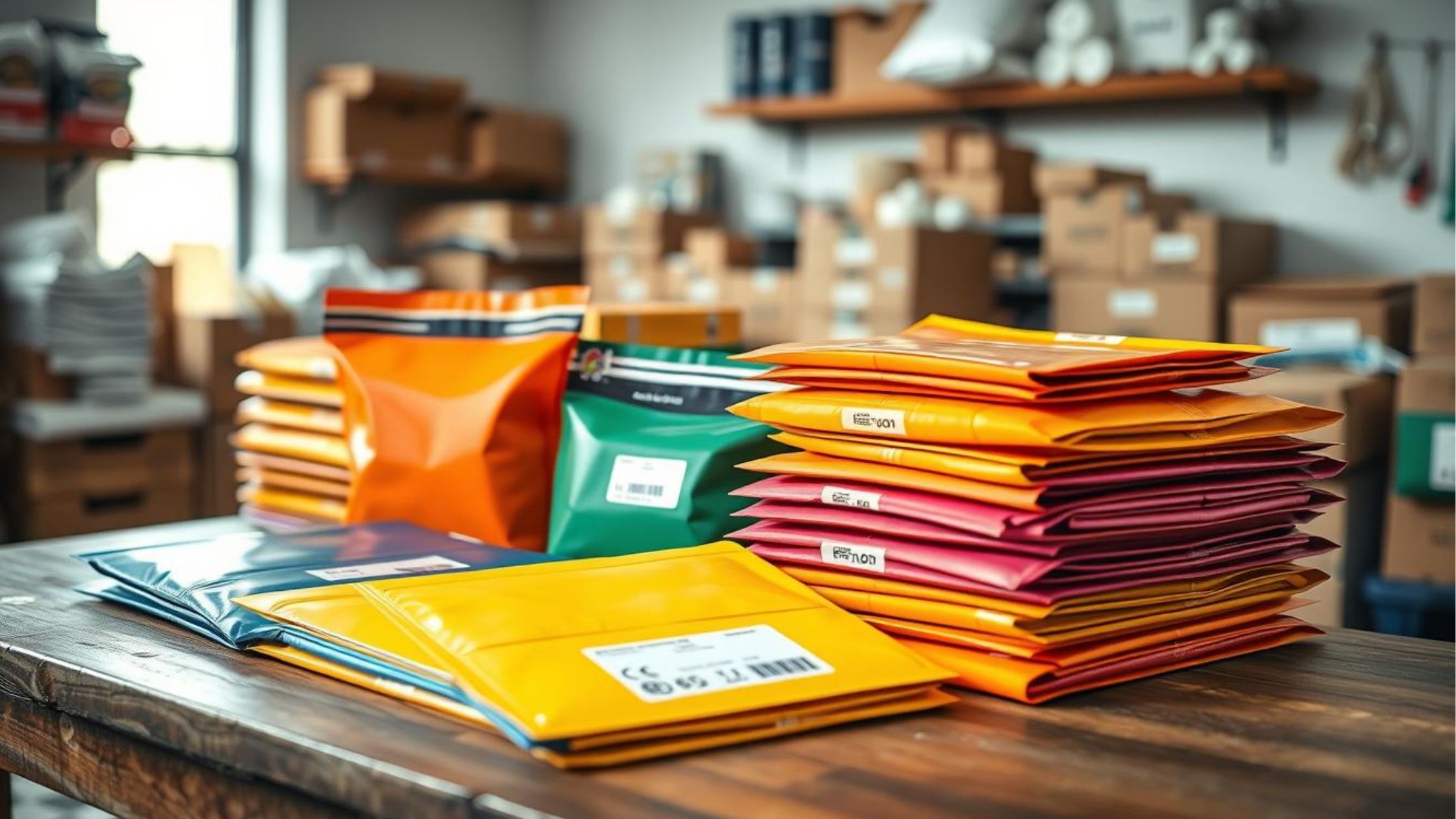
Nearly 40% of light e‑commerce parcels now travel in poly mailers—a reminder that your mailer choice affects cost, speed, and presentation more than you’d think.
We’re here to help you decide when a mailer makes sense and when a box still wins. At The Boxery, we guide you through practical picks—from everyday poly mailers to specialty envelope‑style mailers—so you can pack faster and protect your products.
By “shipping bags”, we mean poly mailers, poly bags used as mailers, and envelope‑style mailers accepted by major parcel carriers. You’ll learn how to weigh protection, opacity, size selection, returns handling, sustainability, and price.
Our goal is simple: help you shop smarter. Compare options, avoid extra dimensional weight charges, and keep presentation and durability on point. Follow a clear path: benefits, product types, sizing and performance, eco options, branding, and price—and an easy next step to order from The Boxery.
Key Takeaways
- Poly mailers often cut costs and packing time for lightweight items.
- The Boxery is a practical supplier and advisor for mailer choices.
- Decide based on protection needs, privacy, size, returns, and sustainability.
- Avoid dimensional‑weight surprises by right‑sizing your mailer or box.
- We’ll walk you from benefits to buying—so you can shop with confidence.
Why E-Commerce Brands Choose Poly Mailers and Shipping Bags
When your product isn’t fragile, a slim mailer can deliver big savings and a cleaner unboxing moment. Poly mailers cut weight and packing time, so you pay less in postage and speed fulfillment.
Quick anecdote: I used to run a small pick‑and‑pack line out of a not‑so‑glamorous corner of a warehouse. We swapped a few slower SKUs from small boxes to well‑sized mailers and—boom—line speed ticked up, waste dropped, and customers were happier. Simple change, real impact… and yeah, I wished we’d done it months earlier.
Lower shipping costs with lightweight packaging vs. boxes
Lightweight poly mailers reduce dimensional‑weight charges for soft goods. Choose the smallest right‑fit mailer to limit empty space and avoid extra fees. That simple move lowers your overall price per order and improves margins.
Secure adhesive closures and durable construction for safer delivery
Secure adhesive seals and tear‑resistant poly construction are why brands trust mailers for everyday lanes. Designer‑printed poly mailers can even act as a little “statement piece” for your brand.
Customer experience wins: faster packing, cleaner presentation, fewer materials
Poly bags speed packing and create a tidy, professional presentation with less waste. You get faster workflows, fewer packing steps, and happier customers—and lightweight mailers help keep postage lean without overbuilding protection.
| Option | Cost | Protection | Best for |
| Standard poly mailer | Low | Basic tear resistance | Soft clothing, small accessories |
| Heavy‑duty poly | Moderate | High puncture resistance | Denser textiles, bulk orders |
| Small box | Higher | High impact protection | Fragile or structured products |
Tip: For reliable stock and quick fulfillment in the US, compare styles and prices at The Boxery so you can match mailers to your products without guesswork.
Shipping Bags Product Types The Boxery Can Help You Compare
Match the mailer to the product and you avoid surprises at the carrier dock. Below is a quick map of major options The Boxery stocks so you can compare types side‑by‑side.
- Tear‑proof poly mailers: Everyday workhorses for apparel and soft goods.
- Poly bubble mailers: Built‑in cushion for small breakables, cosmetics, and accessories.
- Expansion and gusseted mailers: Make room for bulkier orders without forcing a box.
- Clear view front poly mailers: Faster labeling and scan‑and‑sort with visibility.
- Returnable and insulated options: Resealable for exchanges; insulated for temp‑sensitive routes.
| Type | Protection | Best use |
| Tear‑proof Poly Mailers | Basic to high | Clothing, soft goods |
| Poly Bubble Mailers | Moderate | Small fragile items, cosmetics |
| Expansion / Gusseted | Variable | Bulkier or multiple items |
| Clear View / Postal Approved | Low | Labels and packing slips |
The Boxery helps you compare long mailers, Postal Approved lines, and Ship‑Lite® options so you choose confidently for your products.
Shipping Bags: Picking the Right Size for Your Products
Choosing the right mailer size saves time, space, and money at every packing station.
Common sizes shoppers search for
Shoppers often look for specific sizes like 6×9, 10×13, 12×15, 18×18, and 19×24. Envelopes in these dimensions typically fit single garments, small accessories, folded tees, and lightweight home goods.
How to measure for the best fit
Measure the length, width, and thickness of each item. Add a small buffer for seams and closure—about 1 inch on length and width. Avoid a too‑tight fit. Stressed seals split on conveyors and lead to returns or extra fees.
When to pick expansion, long, or envelope formats
Flat mailers work for thin items. Use expansion or gusseted styles when your product has depth. Choose long envelopes for posters or rolled goods to prevent bending.
| Size | Typical Fit | Best Format |
| 6 × 9 | Small accessories, single cards | Flat envelope |
| 10 × 13 | Folded shirts, light textiles | Standard poly mailers |
| 12 × 15 | Bulkier shirts, thin goods | Gusseted or flat |
| 18 × 18 | Multiple items, small boxed goods | Expansion / gusseted |
| 19 × 24 | Large apparel, blankets, posters | Long or large envelope |
Right‑sizing protects your margin. Oversized packaging can trigger dimensional‑weight charges even for light items. We make it simple to standardize a few go‑to SKUs.
The Boxery helps you pick the correct envelopes, poly bags, and mailers the first time, so your packing runs smoother, and your costs stay low.
Protection, Privacy, and Performance During Shipping
Protecting what’s inside starts with picking the right film weight and closure for the trip ahead. If an item is heavy or has sharp corners, step up to heavy‑duty poly bags or thicker poly mailers built to resist tears and punctures.
Choose performance‑first materials
Think durability first. Use reinforced seams and heavier‑gauge poly for denser goods. Polymers with added puncture resistance keep garments and small accessories safe on belts and in transit.
Privacy and opacity made simple
What you ship shouldn’t be a porch billboard. Opaque mailers protect customer privacy for apparel and personal items, while a small clear panel can help with order verification without exposing contents.
Closure choices that cut tampering and damage
Pick strong self‑seal adhesive strips or tamper‑evident closures to reduce lost or opened parcels. Press firmly along the seal, remove excess air, and avoid overstuffing so closures stay effective.
- Reinforce labels on textured surfaces for clean adhesion.
- Fold corners of sharp items or add thin padding to prevent punctures.
- Standardize a few poly mailer sizes so packing stays fast and predictable.
The Boxery can help you balance protection, privacy, and efficiency—so you get secure, cost‑effective packaging without overbuilding the order.
Eco-Friendly Shipping Bags and Sustainable Packaging Options
Choosing sustainable packaging doesn’t mean you give up performance. Today’s options let you protect orders while shrinking environmental impact. Biodegradable and home‑compostable mailers are often made partly from plants and certified to break down more quickly than conventional poly. Home‑compostable usually means the satchel will degrade in a backyard compost setup, but performance varies—thickness, seal strength, and feel are different from standard poly mailers.
Ocean‑bound plastic and impact‑driven materials
Programs that reclaim ocean‑bound plastic turn waste into usable packaging. For example, a multi‑brand rollout recycled 170 tonnes of ocean‑bound plastic into new material—an outcome you can point to when describing your brand’s impact.
Practical selection tips—decide if you want compostable, recycled‑content, or impact‑focused materials. Then match material choice to the product. Heavier or sharp‑edged items may need thicker poly or bubble‑lined mailers to avoid damage.
- Pick compostable mailers for lightweight textiles and non‑fragile items.
- Choose recycled‑content poly for measurable waste reduction and familiar handling.
- Use impact programs when you want a tangible environmental story to share with customers.
Want a quick browse of options while you think through sizing and protection? Here’s a good jumping‑off point for mailer bags across categories The Boxery stocks.
Branding, Price, and Service: What to Expect When You Shop Shipping Bags
A well‑chosen printed mailer turns routine fulfillment into a marketing moment—no extra inserts required. Designer‑printed poly mailers put your brand front and center and make unboxing feel intentional.
How custom branding works
You request a quote, confirm size and material, approve a proof, then move to production and delivery. That step‑by‑step process keeps timelines clear and reduces surprises.
Pricing, bulk orders, and value
Bulk orders lower the per‑unit price. Compare prices fairly by matching thickness, seal type, and print quality—cheap options often cost more in returns and re‑shipments. If you’re buying in volume, consider wholesale shipping mailers so you can standardize SKUs and keep supply consistent.
- Per‑unit price falls with volume.
- Compare features, not just sticker prices.
- Operational cost includes damages and labor saved.
Operational and customer expectations
Standardized mailers mean faster pack lines, consistent label placement, and fewer mistakes. For US customers, fast delivery of supplies and dependable service keep fulfillment running. And when you’re pushing for speed during peak, having a stash of bulk mailers ready to go… priceless.
Conclusion
Finish strong by matching your package choice to the item—simple fit, clear protection, less cost. Choose shipping options like poly mailers when you want lighter packaging, faster packing, and the right level of protection for your products.
Pick the type that fits: tear‑proof, bubble, gusseted, clear‑view, returnable, or insulated mailers. Match film weight and closure to fragility, thickness, and privacy needs. Use heavier poly for sharp or dense items and tamper‑resistant seals where security matters.
Right‑size first to control postage and cut waste, then fine‑tune for performance. Consider compostable or recycled options when they meet delivery needs—sustainability that doesn’t compromise outcomes. When you’re ready to compare, browse The Boxery to review poly mailers, poly bags, and specialty bags, then place your order with confidence backed by dependable service.
FAQ
Are poly mailers right for e‑commerce fulfillment?
Poly mailers are a strong choice when you need lightweight, tear‑resistant packaging that lowers dimensional‑weight charges and speeds packing. They work best for soft goods and non‑fragile items. For breakable products, choose bubble or insulated mailers instead to prevent damage in transit.
How do poly mailers help reduce shipping costs compared to boxes?
Because poly mailers weigh far less and take up less space, they often avoid higher dimensional‑weight fees. Those savings add up on volume orders and lower postage costs. You’ll also use fewer packing materials and spend less time packing—helping your bottom line.
What features make poly mailers secure for delivery?
Look for strong, tamper‑evident adhesives, puncture‑resistant film, and reinforced seams. Opaque construction protects customer privacy, while self‑seal closures speed operations and reduce the need for tape, cutting handling errors and loss.
Which mailer types are best for extra protection?
Poly bubble mailers combine cushioning with the lightweight of poly, offering a good balance for small, fragile items. For heavier, sharp, or oddly shaped items, choose tear‑proof or gusseted mailers that provide extra strength and space.
When should I use expansion or gusseted mailers?
Use expansion or gusseted styles when you ship bulkier or multiple items together—like sweaters, multiple shirts, or bundled goods. They reduce internal shifting and often eliminate the need for boxing, improving packing speed and presentation.
How do I pick the right size to avoid dimensional‑weight surprises?
Measure the longest, widest, and thickest points of the product with any minimal protective wrap. Choose a mailer that fits snugly without overfilling; a smaller footprint lowers carrier dimensional‑weight calculations and gives a neater customer experience.
What common sizes should I stock for typical online retail items?
Keep a range—from small 6″ × 9″ mailers for jewelry or small accessories up to larger 19″ × 24″ options for outerwear. A mid‑range assortment covers most apparel and soft goods while minimizing wasted space and cost.
Are there opaque options to protect customer privacy?
Yes—opaque poly mailers keep contents confidential and present a clean, branded look. Clear‑view front mailers exist, too, often with a pocket for packing slips or labels when you want visibility without exposing the item itself.
What closure options minimize tampering and damage?
Self‑seal adhesive strips with strong peel‑and‑stick closures are the most efficient. Tamper‑evident seals, reinforced tape strips, and resealable options for returns add security for higher‑value items or repeat‑order programs.
Do eco‑friendly mailers perform as well as standard poly?
Modern biodegradable and partially plant‑based mailers can match many performance metrics of traditional poly—tear resistance, seal strength, and weight—when chosen carefully. Verify certifications and compostability claims for your needs.
What is Ocean Bound Plastic, and why does it matter?
Ocean Bound Plastic is a repurposed material collected from at‑risk coastal areas before it reaches waterways. Using it supports circular supply chains and reduces new plastic use—appealing to mindful customers and helping your sustainability goals.
Can I get custom branded mailers, and how does ordering work?
Yes—designer‑printed and custom‑branded mailers are widely available. Typical steps include artwork approval, proofing, minimum order quantities, and lead times. Work with suppliers who provide clear mock‑ups and predictable production schedules.
How do bulk orders affect price and supply reliability?
Ordering in bulk usually lowers per‑unit cost and secures inventory during peak seasons. Compare pricing tiers and lead times across vendors to balance cost savings with storage and cash‑flow considerations.
What operational benefits do mailers provide for packing workflows?
Mailers speed packing with fewer materials to handle, simpler sealing, and consistent labeling areas. They reduce conveyor jams and make fulfillment stations cleaner—so teams pack faster, and errors drop.
What do modern U.S. customers expect from packaging and service?
Today’s shoppers expect fast delivery, tidy presentation, and dependable tracking. Branded, protective, and responsibly made packaging boosts perceived value and trust—helping earn repeat orders.
Are returnable or reusable mailers a good option for exchanges?
Returnable and reusable mailers simplify exchanges and encourage repeat business. They often include resealable closures and durable films designed for multiple trips through the postal system—making returns easier for customers and brands.
Where can I compare different poly mailer types and prices?
Compare mailer styles—tear‑proof, bubble, gusseted, clear‑view, insulated—by material weight, sealing type, and pricing per unit. Look for suppliers that list specs, minimums, lead times, and sample options so you can test before committing.

Recent Comments