
Key Takeaways
- Match the shipping box to the product, not the cheapest price tag — right-sized corrugated boxes cut damage, trim dimensional charges, and make the order look more deliberate before it’s even opened.
- Compare standard and heavy-duty cardboard boxes by weight, fragility, and distance shipped; a small order of dense items may need a sturdier carton than a much larger but lighter one.
- Check stock levels, case counts, and shipping speed before buying in bulk, because a free mailer or a same-day shipped box order can save a week of scrambling when inventory runs low.
- Treat custom packaging as a trust signal, not a vanity add-on — a clean white, blue, or matte shipping box can make a small seller look more settled and more consistent.
- Review dimensions and flat storage space before ordering bulk boxes, since the right size protects margins twice: once on postage and again on warehouse or garage storage.
- Ask whether the package needs cardboard, plastic, or insulated packaging before placing the order; snacks, wine, books, and fragile goods each need a different box choice, not one catch-all crate.
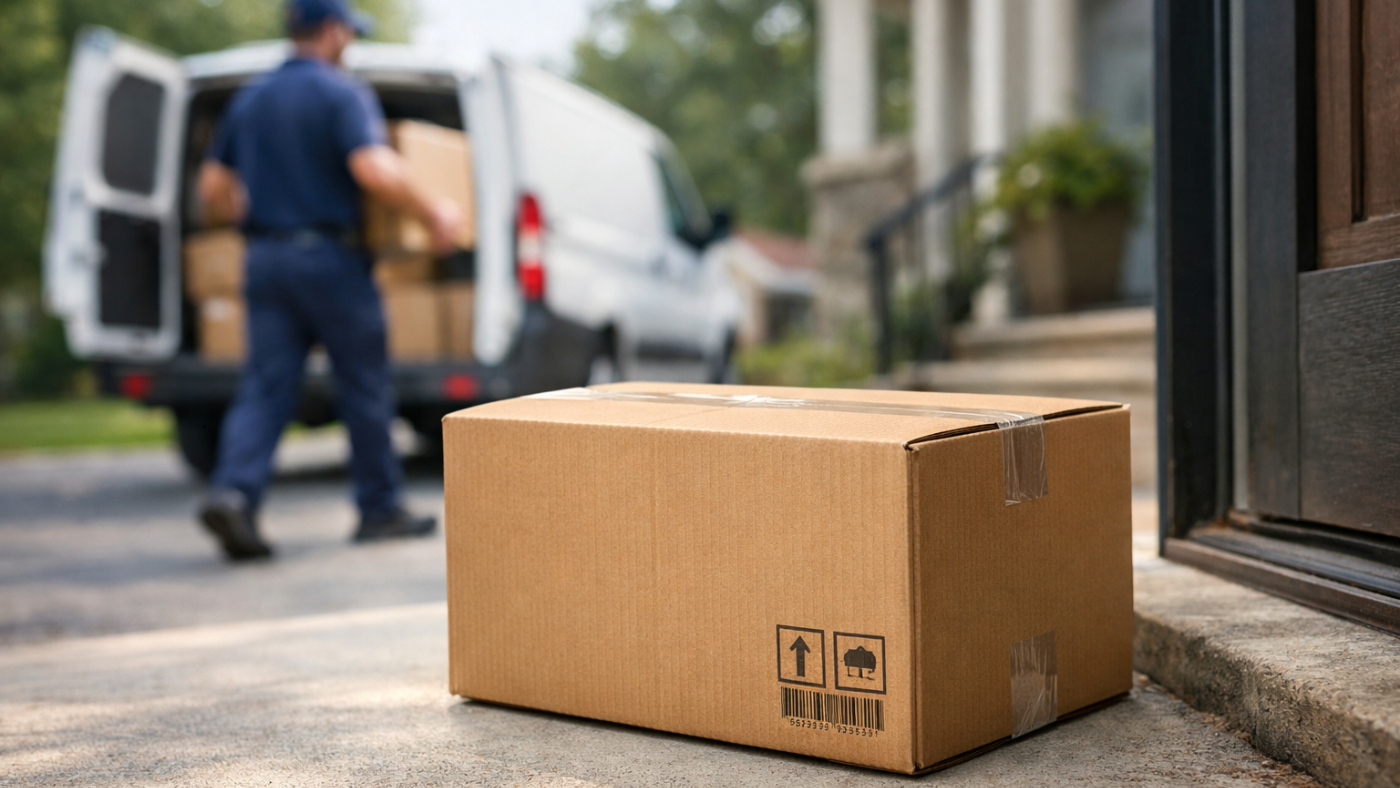
A shipping box can change a customer’s opinion before the tape is even cut. That sounds dramatic — it’s real: a crushed corner, a box that’s twice the product’s size, or a carton that flaps open in transit tells the buyer everything they think they need to know about the seller. Fast. And once that first impression lands, it’s hard to claw back.
For small business owners and warehouse coordinators, that’s not just a branding problem. It hits price, damage rates, storage space, and the speed of every order that leaves the dock. A sturdy corrugated box sized to the item beats a cheap oversized carton almost every time, because the package arrives looking cared for instead of improvised. The honest answer is simple: customers judge the package before they judge the product, and the package is talking whether anyone planned it or not.
1) Why does the shipping box shape first impressions before the customer even opens it
The box lands first, and it talks fast.
- The buyer sees the shipping boxes before the product, so a clean cardboard shipping box or corrugated shipping box has to look sturdy, not tired.
- A crushed corner on a brown shipping box or a too-big mail shipping box says the order was packed in a rush. That’s the kind of detail that drags reviews down before the tape is even cut.
- A neat parcel shipping box with tight dimensions signals care, speed, and consistency. A shipping box for small business needs that signals, because repeat buyers notice it.
And here’s the part most sellers miss: right-sized packaging cuts the empty-space problem. A small shipping box for books, a large shipping box for bulk orders, or a heavy-duty shipping box for dense items all send a different message, and the wrong one can feel sloppy. That’s why online shipping box sourcing matters so much for The Boxery customers, comparing shipping box bulk, shipping box wholesale, and shipping box supplier options. Need a shipping box near me? Usually, the real win is getting the right fit fast, not just the closest cart. Better packaging also shows up in plain language on the packing table (blue label, white tape, flat stack), which keeps the whole operation looking sharp.
Choosing the right corrugated shipping box for price, protection, and fit
Size wins. A cheap shipping box that’s too big usually costs more in postage and does a worse job protecting the item.
Standard single-wall boxes for lighter everyday orders
A standard corrugated shipping box handles books, apparel, and other light orders well, and a plain brown shipping box often does the job without extra spending. For a shipping box for small business orders, the sweet spot is usually the smallest box that leaves about 1-2 inches for void fill. That’s the practical answer.
Heavy-duty corrugated boxes for dense, fragile, or higher-value items
Dense goods need more wall strength. A heavy-duty shipping box protects better for glass, metal parts, or stacked inventory, while a large shipping box should only show up when the item truly needs the space. The Boxery’s cardboard shipping box options fit that bulk-buy reality, especially for shipping box bulk — shipping box wholesale orders.
Why matching dimensions matters more than buying the cheapest box
Carrier pricing punishes wasted air. A mail shipping box or parcel shipping box that matches the product cuts dimensional weight, and that’s where the real savings live. Want proof? A box that’s 2 inches shorter on each side can trim billable weight fast.
Common size mistakes that drive up cost and damage
Oversized boxes, weak corners, and bad fit create crushed returns. A small shipping box beats a giant box with empty corners, and a good shipping box supplier should help match dimensions before price alone takes over. A shipping box online search, or even a quick shipping box near me check, usually turns up the same lesson: fit first, price second.
Fast, free, and available: how supply speed affects shipping performance
About 60% of late shipments start with a supply problem, not a carrier problem. That’s the blunt part. If a warehouse runs out of shipping boxes on Tuesday, the parcel slips, the review drops, and the customer blames the seller.
Why bulk buyers care about stock levels and same-day shipping
A corrugated shipping box that’s in stock today matters more than a perfect price that shows up next week. For a shipping box for small business, same-day dispatch keeps the line moving when orders spike. A shipping box bulk order also cuts the scramble that hits when a brown shipping box size sells out right before a weekend rush.
How free shipping on mailers changes the total packaging cost
Here’s what most people miss: free shipping on a mail shipping box or mailer can beat a lower unit price somewhere else. A shipping box wholesale quote looks good only if freight doesn’t erase it. And a heavy duty shipping box is worth the extra few cents when breakage would cost a refund, a reshipment, and a bad rating.
Using flat, compact packaging to save storage space in small operations
A small shipping box still eats shelf space. That’s why flat cardboard stock, a shipping box supplier with deep inventory, and a shipping box online order process help lean teams. Some buyers search for shipping boxes near me, but the better test is simple: can the parcel shipping box arrive fast, fit the product, and hold up under a large shipping box load? For The Boxery, speed and stock depth do the heavy lifting (not the marketing copy). Realistically, that’s what keeps the dock calm.
It’s not the only factor, but it’s close.
How custom and branded shipping boxes support review-worthy unboxing without overspending
Write this section as if explaining to a smart friend over coffee — casual but accurate and specific. A shipping box doesn’t need to shout to do its job; it just needs to look intentional, fit the product, and survive the handoff. That’s why a brown shipping box still works for a lot of sellers, especially when the branding lives in tape, inserts, or a clean label instead of full-color print.
When a custom shipping box makes sense for small businesses
Custom makes sense when repeat buyers can spot the package from a mile away, or when the product itself is part of a premium gift or subscription. A shipping box wholesale order helps keep the unit price sane, and a shipping box for small business needs to match actual order volume, not wishful thinking. If the parcel leaves the warehouse in a large shipping box with room to rattle, the review risk starts before the tape is cut.
White, matte, blue, and other finishes that change perceived value
White corrugated reads cleaner. Matte finishes feel calmer, blue feels more deliberate, and a plain cardboard shipping box still looks better than an oversized cube stuffed with void fill. The same logic applies to a corrugated shipping box, a small shipping box, a mail shipping box, and a parcel shipping box — finish and fit shape the first impression fast.
Keeping branding subtle so the package feels polished, not promotional
Here’s what most people miss: the best package doesn’t advertise. It feels tidy, not loud. A shipping box bulk buy from a shipping box supplier or shipping box online source can keep costs down, while a shipping box near me search often turns up pricier, limited stock. The Boxery is one example of a supplier built for that bulk-first math. And that’s exactly why a heavy-duty shipping box should be reserved for the jobs that need it, not every order.
What buyers need to know before ordering shipping boxes in bulk
A warehouse team ships 400 orders a week, and 60 of them are notebooks in a carton that’s 2 inches too wide. That sounds minor. It isn’t. The extra air adds cost, slows packing, and turns a decent product into a clumsy opening experience.
Comparing cardboard, plastic, and insulated packaging for the right use case
A cardboard shipping box works for most everyday orders, while a corrugated shipping box gives better crush resistance for heavier stock. A brown shipping box keeps costs down, a mail shipping box fits flatter items, and a parcel shipping box handles mixed SKUs without wasting space. Plastic is fine for moisture-sensitive goods, but it’s the wrong choice for most e-commerce returns; insulated packaging belongs only where temperature matters.
Buy for the item, not the average order. That’s the part most teams miss.
Why warehouse coordinators should buy for the item, not the average order
A small shipping box should match apparel, parts, or books. A large shipping box belongs to bulky items. A heavy-duty shipping box is the right call for dense products, while a shipping box for small business inventory should cover the 5 to 7 repeat sizes that drive 80% of volume. That’s where shipping boxes earn their keep.
Most people skip this part. They shouldn’t.
How to compare price, rate, dimensions, and case count without guesswork
Compare unit price, freight rate, and inside dimensions together. A shipping box bulk quote can look cheap until the case count doubles storage pressure. A shipping box wholesale order usually wins on price, but only if the shipping box supplier can keep stock moving. The honest answer is simple: a shipping box online order from The Boxery is easier to compare, but a shipping box near me search only helps if speed matters more than consistency.
The practical tradeoff between smaller runs and bulk stock on hand
- Smaller runs cut cash tied up in stock.
- Bulk stock reduces reordering and stockouts.
- Flat cartons store better than mixed odd sizes.
That tradeoff decides whether the packing line stays calm or turns into a rush. Fast, not fancy.
Frequently Asked Questions
Does USPS still give free boxes?
Yes, USPS still offers free boxes for certain services, mainly Priority Mail and Priority Mail Express. Those boxes are meant for USPS postage rules, so they’re free only if the shipment qualifies. If a seller needs a plain shipping box for another carrier or for bulk packing, buying corrugated boxes in the right dimensions is usually the smarter move.
Where can I get a box for shipping for free?
Free shipping boxes turn up in a few places: USPS supply stores, some retail pickup counters, and sometimes from reuse programs through offices or warehouses. The catch is fit and consistency. A used box can be fine for a light item, but if the product is valuable, fragile, or heavy, a new sturdy box is safer.
Is it cheaper to ship your own box or a USPS box?
That depends on the service and the box size. USPS-branded boxes can be free, but you’re locked into USPS service rules, while your own shipping box gives you more freedom to compare rate options across carriers. In practice, the cheapest choice is often the box that fits the item closely enough to avoid paying for air.
Will the USPS provide a box for shipping?
Yes, USPS will provide a box for eligible Priority Mail and Express Mail shipments. They won’t hand out a free box for every kind of shipment, and they won’t make oversized packaging magically cheaper. If the goal is bulk fulfillment, businesses usually do better keeping a stock of standard corrugated boxes, mailers, and tape on hand.
What size shipping box should a small business use?
The right size is the one that leaves just enough room for protection without wasting space. A 6x6x6 box works for compact goods, while apparel, books, and shoes often fit better in flat mailers or shallow box styles. Oversizing is expensive fast, because dimensional weight charges can punish empty space harder than the box itself.
How strong should a shipping box be for e-commerce orders?
For most lightweight and medium products, standard corrugated boxes are enough. If the contents are dense, fragile, or stacked in transit, double-wall or heavy-duty cartons make more sense. A cheap box that collapses costs more than the better box you hesitated to buy.
The data backs this up, again and again.
What’s better for clothing: a shipping box or a mailer?
For soft goods like shirts, leggings, and light accessories, a poly mailer or corrugated mailer is often the better choice. It takes less storage space and usually lowers postage. Use a box only when the item needs structure, presentation, or extra crush protection.
Can a custom shipping box help lower costs?
Yes, if the custom size is built around the product instead of around a guess. A tight-fit custom shipping box can cut void fill, reduce damage, and trim dimensional charges on repeat orders. That matters a lot once a business is sending the same item 100 times a week.
What’s the biggest mistake people make when buying shipping boxes?
They buy one or two sizes and try to force every product into them. That creates wasted space, weak packing jobs, and higher shipping rates. A better plan is to match box dimensions to the actual product line, then keep a small stock of the most-used sizes.
Should businesses buy shipping boxes in bulk?
Usually, yes. Bulk buying lowers unit price, reduces emergency reorder stress, and keeps fulfillment moving when order volume jumps. The tradeoff is storage space, so the right balance is a stock level that covers real demand without tying up cash in boxes nobody’s using.
A better shipping box does more than hold product. It sets the tone before the tape is cut, and that tone shows up later in the review. A box that fits right, arrives intact, and looks deliberate tells the buyer the seller paid attention. An oversized carton or crushed corner says the opposite. Fast.
For small business owners and warehouse coordinators, the real win is simple: choose boxes by item weight, fragility, and actual dimensions, not by what’s cheapest on the page. Standard corrugated works for plenty of everyday orders. Heavy-duty board earns its keep on dense or high-value goods. And if storage space is tight, flatter packaging and steady stock can save more than a few cents per unit.
The next step is practical. Review the last 30 days of orders, flag the three most common pack-outs, and reorder the box sizes that cut empty space the most.

Recent Comments