
Key Takeaways
- Match corrugated box dimensions to the product first, not the shelf space. A 2-inch miss can push shipping into a larger rate tier and quietly add 10% to 12% to the bill.
- Choose the right box strength for the load. Standard 32 ECT corrugated boxes work for a lot of office and retail shipping, but heavy, fragile, or insulated items need double-wall or triple-wall protection.
- Buy boxes as a system, not a one-off fix. Wholesale corrugated boxes cut unit cost, but only if the sizes fit your repeat orders and your storage space doesn’t turn into dead stock.
- Pair corrugated boxes with the right tape, labels, and void fill. Weak pack-out choices lead to crushed corners, returns, and re-shipments that cost more than sturdier cardboard ever would.
- Compare total landed cost, not just the sticker price. Free cardboard can help in a pinch, but the cheapest place to get boxes isn’t always the cheapest shipment once damage, freight, and dimensional weight charges show up.
A box that’s “close enough” can quietly burn 12% out of a shipping budget, and office and retail owners usually don’t spot it until the monthly statement lands. That’s why corrugated boxes matter more than most people think. The wrong size adds dead air, pushes up dimensional charges, and turns a light shipment into a large-rate headache. The wrong strength does something worse: it invites crushed corners, returns, and re-shipments.
In practice, the fix isn’t fancy.
It’s about choosing boxes that match the product, the route, and the way the item gets packed on the line. A white retail box for a shelf-ready kit isn’t the same as a long carton for a bike part, and a small stock box for snack items won’t behave like an insulated shipper for cold goods. Get the fit wrong, and the costs stack up fast. Get it right, and shipping gets a lot less annoying.
Corrugated box basics: what buyers actually need to know before they order
A retail manager packs a 14-inch display kit in a box that’s two inches too wide. The order ships fine. The bill doesn’t — DIM charges quietly climb, and the extra cardboard only adds dead air.
Corrugated boxes work because fluting turns thin paper into a sturdy shell. For shipping, that flute gap matters more than looks; it cushions, resists crush, and helps a box hold shape when pallets get stacked. Buyers comparing corrugated boxes should also check dimensions, not just strength. A box that matches the product beats one that’s just large.
What a corrugated box is, and why the fluting matters for shipping strength
Single-wall corrugated boxes fit light stock, snack kits, and other non-fragile items. Double-wall is the safer call for heavy books, wine, or small appliances. White, matte, or kraft corrugated boxes each send a different signal, but the build still has to match the load.
Cardboard vs. corrugated boxes: the difference buyers keep mixing up
Plain cardboard is a broad term; corrugated cardboard boxes for shipping use a fluted inner layer. That’s why corrugated mailer boxes and corrugated boxes with lids protect better than thin folding cartons. For bulk buyers, corrugated boxes wholesale and corrugated boxes bulk pricing make sense only if the box style fits the job.
This is the part people underestimate.
Standard, heavy-duty, white, and custom corrugated boxes: which jobs each one fits
Corrugated packaging boxes, corrugated moving boxes, corrugated storage boxes, corrugated packing boxes, and corrugated boxes for small businesses all solve different problems. Recycled corrugated boxes and kraft corrugated boxes help cut waste, and corrugated box sizes should be matched to the target product before anyone orders from The Boxery.
Mistake #1: choosing box dimensions that are close enough instead of exact
Small miss, big bill. A box that’s just 2 inches too wide can push a parcel into a higher dimensional-weight bracket, and that’s how a light snack box or a flat catalog order starts pricing like a large shipment. For corrugated boxes, exact dimensions matter more than most owners expect.
How oversized boxes trigger dimensional weight charges on shipping labels
Carriers don’t care that the item inside weighs only 4 pounds if the carton is taking up air. corrugated cartons that fit the product tightly help avoid wasted cubic space, and that matters for shipping labels, rate shopping, and freight audits. A 16x12x12 box can price very differently from a 14x10x10 box. That gap adds up fast.
Why a 2-inch sizing miss can turn a small order into a large-rate shipment
For corrugated packing boxes, a 2-inch miss on each side can mean a jump in box class, void fill, and tape use. That’s the real cost. It hits white mail orders, bulk replenishment, and wholesale reorders alike.
Common fit problems for long, flat, and extra-tall products
Long boxes for bike parts, flat boxes for books, and extra-tall cartons for bottles all need the right dimensions. Single wall corrugated boxes work well for lighter loads, but only if the size matches the product. Check corrugated box sizes before buying corrugated cardboard boxes for shipping, corrugated packaging boxes, corrugated moving boxes, corrugated storage boxes, corrugated mailer boxes, corrugated boxes wholesale, corrugated boxes bulk, corrugated boxes for small business, corrugated boxes with lids, recycled corrugated boxes, kraft corrugated boxes. The Boxery stocks plenty of options.
Mistake #2: buying the wrong box strength for the product weight and route
What box strength do they actually need? For most shippers, the answer isn’t the thickest box on the shelf. It’s the one that matches the load, the route, and the amount of handling the package will take before it lands in a buyer’s hands.
32 ECT, double-wall, and triple-wall corrugated boxes explained in plain English
Corrugated cardboard boxes for shipping are usually fine at 32 ECT for light to medium products, while double-wall and triple-wall builds make more sense for dense parts, insulated goods, or long-haul freight. A carton that looks sturdy can still crush if it’s packed like a brick. That’s why corrugated cartons, corrugated packaging boxes, and corrugated packing boxes shouldn’t be judged by looks alone.
When stock boxes are sturdy enough, and when they’re just expensive cardboard
Here’s the blunt part: overbuying strength costs money. Single wall corrugated boxes work for many small retail orders, corrugated mailer boxes handle flatter items, — corrugated moving boxes or corrugated storage boxes make sense when the box gets reused or stacked. For office stock, long runs of dimensions that repeat are easier to manage than guessing.
How fragile, insulated, or heavy items change the packaging choice
Fragile glass, snackle-style kits, bike parts, or white product sets need padding and fit, not just bigger cardboard. corrugated boxes wholesale help keep unit cost down, and recycled corrugated boxes and kraft corrugated boxes give buyers a practical option that still holds up. For corrugated boxes for small businesses, that difference can shave real money off every shipment.
- Match strength to weight, not habit.
- Use larger boxes only when the product truly needs the space.
- Check whether lids or inserts are doing the real work.
The honest answer is this: the right box protects the margin twice. Once on damage. Once on shipping.
Mistake #3: treating packaging like a one-size purchase instead of a repeatable system
It’s a cost leak. A retailer that buys boxes only when stock runs low usually pays 12% more across a quarter, and the damage shows up in rush freight, odd-size fills, and wasted space.
Bulk wholesale buying vs. emergency retail buys: where the cost gap really shows up
Bulk buying matters because corrugated packaging boxes and corrugated boxes bulk orders cut unit price, but they also cut chaos. For corrugated boxes wholesale and corrugated boxes for small businesses, a clean reorder point beats a panic buy from the local shelf every time. That’s the honest answer.
How box storage, inventory turns, and reorders affect total shipping spend
Storage is part of the shipping cost. Corrugated storage boxes, corrugated moving boxes, and corrugated cartons all sit on real square footage, so slow turns trap cash and clutter docks. The fix is simple: keep 2-3 weeks of fast movers, then reorder before the last pallet gets opened.
Why matching box sizes to product families cuts waste across the whole line
Right-sizing matters. Corrugated box sizes should match product families, not guesswork, and single-wall corrugated boxes work for lighter SKUs, while heavier lines need more stiffness. Kraft corrugated boxes, corrugated cardboard boxes for shipping, corrugated packing boxes, corrugated boxes, corrugated boxes, corrugated boxes with lids, recycled corrugated boxes, and corrugated mailer boxes all behave differently on a line (and in a truck). Match the box to the SKU, and the waste drops fast.
Mistake #4: ignoring how box choice affects the rest of the pack-out process
Bad box choice adds cost fast. 1. A box that’s too wide forces extra tape, more void fill, and a longer pack time. 2. A box that’s too weak turns into damage, returns, and a second shipment. 3. A box that doesn’t match the item wastes cardboard and pushes DIM charges higher.
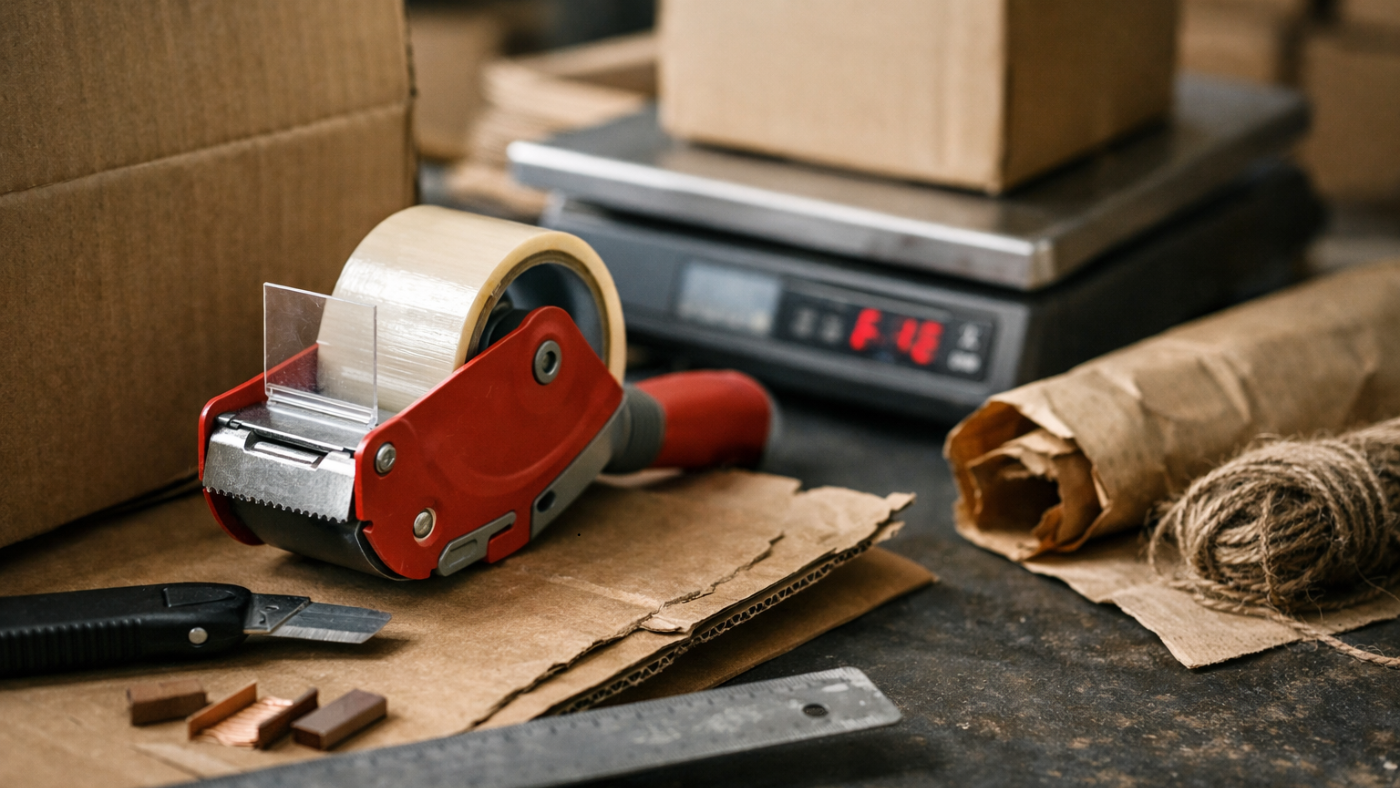
Pairing corrugated boxes with tape, void fill, and labels without overpacking
Office — retail teams get better results with corrugated cartons, corrugated packaging boxes, and corrugated packing boxes that fit the target item closely; that usually means less bubble wrap, fewer inserts, and cleaner labeling. In practice, corrugated cardboard boxes for shipping should match the product, not the other way around. White labels stick better on flat panels, and snug pack-outs cut down on bumps during transit.
How poor box selection creates damage, returns, and re-shipments
One crushed corner can snowball into a full re-ship. That’s why single-wall corrugated boxes work for lighter loads, while recycled corrugated boxes or kraft corrugated boxes make sense for routine stock. For fragile items, corrugated mailer boxes or corrugated boxes with lids keep contents stable. For bulk inventory, corrugated storage boxes and corrugated boxes wholesale orders reduce the scramble.
Practical ways office and retail businesses standardize boxes without boxing themselves in
Use a tight set of corrugated box sizes, not a closet full of odd cartons. Corrugated boxes bulk buying helps too, especially for corrugated boxes for small business teams that need predictable costs. Corrugated moving boxes from corrugated moving boxes and corrugated boxes for small businesses keep the pack-out simple, and The Boxery gives buyers a wider size match without overpacking. That’s the real fix.
Search intent answer: how to buy corrugated boxes that lower shipping costs right now
Write this section as if explaining to a smart friend over coffee — casual, accurate, and specific. The first mistake is buying the wrong size and paying DIM charges on air. A 12x12x12 box can cost more to ship than the product inside, even when the cardboard looks sturdy.
The fastest way to compare prices, dimensions, and freight terms across suppliers
Start with landed cost, not sticker price. That means box price, freight, and the number of units per case. A retailer comparing corrugated cartons, corrugated packaging boxes, and corrugated packing boxes should also check whether the quote includes flat rate or free shipping, because a cheap pallet can turn expensive fast. For repeat orders, corrugated boxes wholesale and corrugated boxes bulk pricing usually beat spot buys by 10% to 18%.
What to look for in wholesale corrugated boxes when the goal is lower landed cost
Look for single-wall corrugated boxes for light goods, recycled corrugated boxes for sustainability goals, and kraft corrugated boxes for plain shipping. Corrugated cardboard boxes for shipping, corrugated mailer boxes, corrugated moving boxes, and corrugated boxes with lids all solve different jobs; mixing them up burns cash. The Boxery often helps buyers match corrugated box sizes to product dimensions so boxes don’t act like expensive air.
Where free cardboard makes sense, and where “free” turns expensive fast
Free cardboard can work for storage only. For shipping, scratched-up boxes, weak seams, or random sizes can trigger damage, returns, and ugly reviews. If the goal is corrugated storage boxes for stock rooms, free can be fine. For shipping, it usually isn’t.
Frequently Asked Questions
What is the difference between a cardboard box and a corrugated box?
A cardboard box is the broad term people use for paper-based boxes. A corrugated box has a fluted layer sandwiched between linerboards, which gives it much better crush strength and shipping protection. For storage, shipping, and inventory work, corrugated boxes are the smarter pick almost every time.
What is a corrugated box?
It’s a box made from corrugated cardboard, usually with one, two, or three walls of fluting. That fluted middle layer is what helps the box hold weight, resist dents, and protect what’s inside. If a business needs sturdy packaging for regular shipping, corrugated is the standard for a reason.
What’s the cheapest place to get boxes?
The cheapest option is usually a wholesale packaging supplier that sells corrugated boxes in cases or bulk quantities. Free boxes from retail back rooms or moving leftovers can work in a pinch, but they’re rarely the right size, and they’re often beat up. If the goal is saving money on actual shipping, right-sized wholesale corrugated boxes beat scavenged boxes pretty quickly.
Where can you get free cardboard?
People often find free cardboard from grocery stores, appliance stores, liquor stores, and office supply recycling bins. That said, free doesn’t mean useful. Those boxes may be greasy, weak, oddly sized, or already stressed, which makes them a poor choice for shipping anything you don’t want to see come back damaged.
What corrugated box strength should a small business use?
For most small and office retail shipments, standard single-wall corrugated boxes rated 32 ECT are a solid starting point. If the item is dense, heavy, or fragile, double-wall is the safer call. Don’t guess on weight — match the box to the actual contents, not the product photo.
How do box dimensions affect shipping costs?
Dimensions drive dimensional weight charges, and that’s where a lot of businesses bleed money. A box that’s 2 inches too big can cost more than the product itself on some shipments. Choosing the smallest corrugated box that still gives the item room for protection is one of the fastest ways to cut waste.
Let that sink in for a moment.
Are white corrugated boxes better than Kraft brown boxes?
Neither one is automatically better. White corrugated boxes usually look cleaner for retail presentation and custom printing, while kraft boxes are common, durable, and often more cost-friendly. The right choice depends on how the package is used — storage, shipping, display, or branded unboxing.
Can corrugated boxes be used for storage as well as shipping?
Yes, and that’s one of their best uses. Corrugated boxes are good for inventory organization, seasonal stock, archived files, and moving supplies because they stack well and come in so many dimensions. Just make sure the box strength matches the load if it’s going to sit on a shelf for months.
Do corrugated boxes work with custom printing?
They do, and that’s a smart move for businesses that want their packaging to look intentional instead of random. Printed corrugated boxes can carry a logo, a return message, or simple handling instructions without adding much complexity. The best designs stay clean. Too much ink and clutter usually look worse, not better.
How should corrugated boxes be stored before use?
Keep them flat, dry, and away from direct moisture. A corrugated box can lose strength fast if it gets damp or bent out of shape. Stack by size, label the bundles clearly, and don’t cram heavy stock on top of the lighter sizes unless you enjoy warped corners and wasted packaging.
Shipping bills don’t usually jump because of one giant mistake. They creep up because a box is two inches too wide, a carton is stronger than the job calls for, or a team keeps buying piecemeal instead of setting a repeatable pack-out standard. That’s where the 12% gets lost. Quietly. Month after month.
The smarter move is plain enough: match corrugated boxes to the product, not to the shelf space available that day. Keep the fit tight, choose the lightest strength that still protects the contents, — lock in a small set of box sizes that cover the bulk of orders. Then build the rest of the pack-out around that choice — tape, void fill, labels, the whole routine — so the process doesn’t keep changing every week.
For office and retail operators, that kind of discipline pays back fast. Review the top five ship sizes this week, compare them against actual product dimensions, and replace the worst-fitting box first. Start there.



Recent Comments