
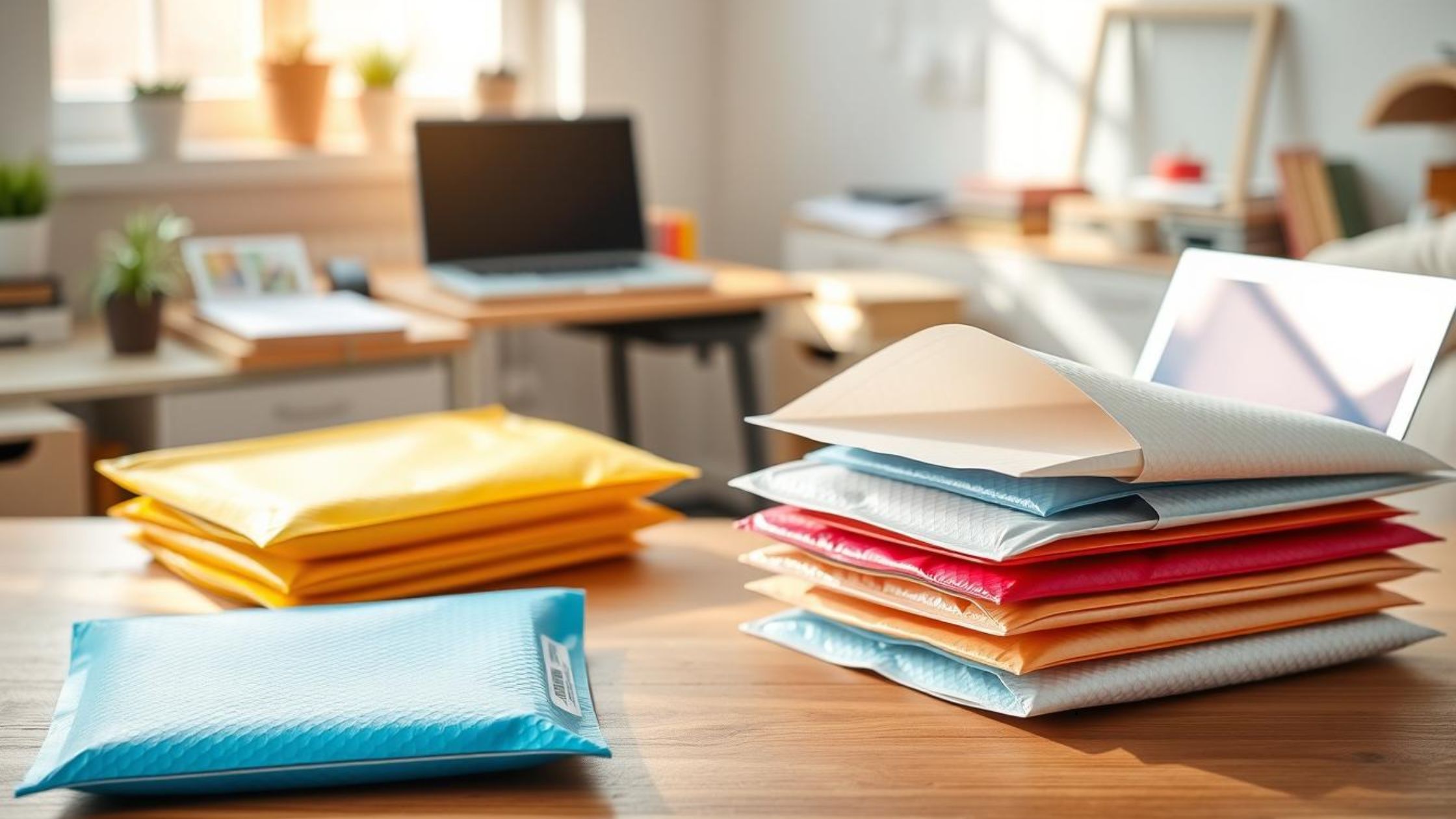
Look, I get it. You picked out solid protective packaging. You did the research, compared your options, and maybe even read a few guides. And then something still showed up broken on your customer’s doorstep. I’ve lived that exact moment — staring at a refund request, a one-star review loading on my screen, wondering where it all went sideways.
Here’s what nobody really tells you upfront: choosing the right bubble shipping mailers is only half the battle. Using them correctly? That’s the part most sellers skip over. And it’s where things fall apart — sometimes literally.
At The Boxery, we’ve walked thousands of e-commerce businesses through these exact headaches. The same handful of errors show up again and again, quietly chipping away at margins and customer trust. This isn’t about shaming anyone. I made most of these mistakes myself before I figured out what was actually going on.
Think of this as the guide I wish someone had handed me three years ago. We’re covering the ten most common pitfalls — why they happen, what they cost you, and how to fix each one so it never bites you again. You’ll come out the other side knowing how to pick the right mailer for your product, seal it as you mean it, and deliver something your customers actually feel good opening.
The goal isn’t perfection. It’s turning packaging from that thing you stress about into something you barely have to think about because the system just works. Let’s get into it.
Key Takeaways
- Even quality cushioned mailers can fail when they’re used wrong — and trust me, the fallout is expensive.
- Simple packaging errors quietly eat into your profits and tank your brand reputation over time.
- Matching the right mailer to your specific product isn’t optional — it’s the foundation of safe shipping.
- A sloppy seal can undo every other thing you did right. Technique matters more than people realize.
- Knowing your mailer’s dimensions and weight limits prevents the two extremes: overpacking and underprotecting.
- Smart packaging decisions improve the unboxing moment and build the kind of loyalty that drives repeat sales.
- Getting this right protects your items, your bottom line, and — yeah — the environment too.
What Are Bubble Shipping Mailers and Why Do They Matter?
Before we dig into what goes wrong, it helps to really understand what you’re working with. And I mean understand it, not just grab one off a shelf and toss your product inside. When I started shipping, I thought a mailer was a mailer. That ignorance cost me a lot of money.
Defining the Protective Envelope Solution
So let’s get specific. A bubble mailer — sometimes called a cushioned mailer — is a purpose-built shipping envelope constructed from tough polyethylene film and lined with air-filled bubble cushioning. It’s not some fancy paper sleeve. It’s an engineered system designed to absorb shock and resist tearing.
The outer layer handles the rough stuff: conveyor belts, sorting bins, and being tossed into delivery trucks. Quality padded envelopes from suppliers like The Boxery also provide reliable moisture-proofing, which matters more than most sellers realize until their first rainy-day disaster.
Inside is where the real work happens. Each individual air pocket functions as a tiny shock absorber. Together, they form a cushioned cocoon around whatever you’ve packed. It’s elegantly simple, and when used correctly, it works incredibly well.
The thing is, “when used correctly” is doing a lot of heavy lifting in that sentence. Understanding the design — the why behind the construction — changes how you approach every shipment. You stop guessing and start making informed choices.
The Role of Cushioning in Safe Transit
Why does that interior cushioning matter so much? Because the shipping journey is brutal. Your package gets dropped. It gets stacked under heavier packages. It slides around in trucks. That cushioning layer absorbs and dissipates force before it reaches your product.
Think about the items you’re shipping. Jewelry. Small electronics. Cosmetics. Accessories. Without proper cushioning, they arrive scratched, cracked, or outright broken. With it, they arrive the way you intended — pristine.
I can’t overstate this: safe transit is the backbone of customer satisfaction. One damaged product triggers a return, a refund, probably a nasty review, and almost certainly a lost customer. That’s not just a bad day. That’s compounding damage to your business.
Understanding what a bubble mailer does and doesn’t do sets you up for the rest of this guide. Because once you know where the protection comes from, you can spot the mistakes that undermine it. And there are more of them than you’d think.
The High Cost of Getting Bubble Mailer Packaging Wrong
Here’s a number that kept me up at night when I first started tracking it: each packaging failure was costing my business roughly $35 to $50 when I added everything up. The product itself. The outbound shipping. The return label. The labor to process the return. The replacement item. The second shipping charge. That’s not even counting the stuff you can’t put a dollar sign on.
And the stuff you can’t quantify? That’s honestly worse.
A customer who receives a damaged item doesn’t just want their money back. They lose trust. They might leave a review that sits there for months, steering other shoppers away from your listings. I watched my seller rating drop from 4.8 to 4.3 over the course of about six weeks, and it took me the better part of a year to claw it back.
There’s an environmental angle too, one I didn’t think about initially but probably should have. A failed shipment means double the packaging materials. Double the fuel. Double the carbon footprint. For what? Because I grabbed the wrong size mailer or skimped on the seal.
At The Boxery, we’ve worked with businesses who cut their damage rates dramatically — sometimes by 70% or more — just by correcting a handful of packing errors. These weren’t massive operational overhauls. They were small, specific adjustments that anybody can make.
That’s the thing about these costs. They accumulate fast, but they’re also very fixable. Each mistake we cover below has a clear, straightforward solution. And once you implement them, the savings start compounding in your favor instead of against you.
Mistake #1: Selecting the Wrong Size Mailer for Your Product
This is the one I see most often, and it’s the one I personally messed up for longer than I’d like to admit. You eyeball a mailer, figure it’s “close enough,” and send it on its way. Except that close enough in packaging is the same as wrong. There’s no participation trophy for almost fitting.
Getting the size right isn’t just nice to have. It’s the single most impactful decision in your entire packing process.
The Consequences of a Poor Fit: Damage and Movement
Grab a mailer that’s too big, and your product becomes a pinball. It slides and slams into the interior walls with every bump, every sort, every toss. All that cushioning you paid for? Useless. The item is generating its own kinetic energy inside the envelope, and when it hits the wall hard enough, something breaks.
I shipped handmade ceramic earrings in mailers that were two sizes too large for about three months before I connected the dots. The damage rate was around 8%. That doesn’t sound catastrophic until you realize I was shipping 400 orders a month. That’s 32 damaged orders. Every single month.
Too small is a different kind of bad. Force your product into a tight mailer, and you stress the seams, compromise the adhesive strip, and dramatically increase the odds of the whole thing splitting open in transit. Either way — too big or too small — the result is the same: your protection becomes the problem.
How to Accurately Measure Your Item for the Perfect Fit
This part is simple. It just requires actually doing it instead of guessing. At The Boxery, we recommend a straightforward three-step process for every product you ship.
- Lay your item flat. Place it on a stable surface in its natural shipping orientation.
- Find the bounding box. Using a ruler or tape measure, determine the farthest points of the item. Measure length, width, and depth at the widest spots.
- Write those three numbers down. This is your minimum internal space requirement. No estimating. No rounding. Actual measurements.
Works for weird shapes too. Always measure at the widest, tallest, and deepest points. The minute you start eyeballing, you’re back to guessing, and guessing is what got you into trouble in the first place.
Understanding Internal vs. External Dimensions
Here’s a detail that trips up even experienced shippers. The dimensions listed on most product pages are internal measurements — the usable space inside the mailer. The external dimensions are always larger because of material thickness and sealed edges.
So when a mailer says 6.5″ x 8.75″, that’s what you get inside. The outside footprint is bigger. You have to compare your product measurements against the interior specs, not the exterior.
Our rule of thumb: pick a mailer whose internal dimensions exceed your item’s bounding box by at least a quarter inch on every side. Enough room for easy insertion without cramming. Not so much room that the product rattles around.
And honestly? Don’t just guess whether it works. Order samples. The Boxery offers free samples of our bubble mailers — test the fit with your actual product before you commit to a full case. That ten-minute test saves you from discovering an entire order doesn’t work after it’s sitting in your garage.
Get the size right, and you’ve built the foundation for everything else. Every other decision in the packing process is easier when the fit is dialed in.
Mistake #2: Overlooking the Mailer’s Weight Capacity
Every cushioned mailer has a weight limit. I know that sounds obvious when you read it, but you’d be amazed how many sellers just… ignore it. You see a sturdy-looking envelope and figure it can handle whatever you throw in there. I made that exact assumption with a batch of small brass hardware pieces. Learned real quick that the assumption was wrong.
Each mailer is engineered for a specific weight range. Exceed it, and the whole system compromises.
When a Bubble Mailer Isn’t Strong Enough
Cushioned mailers are champions of lightweight protection. They’re built for fragile, low-weight items. But they have limits, and pretending otherwise invites disaster.
Material thickness and construction quality determine strength. A thin, economy-grade mailer might hold up fine for a sheet of stickers or a pair of earrings. Put a small hardcover book in that same mailer, and the seams start talking to you — and not in a good way.
Dense, concentrated weight is the real danger. A metal component puts stress on a tiny surface area. A folded scarf distributes weight evenly. The metal will punch through where the scarf won’t. At The Boxery, our bubble mailers are built with robust materials for appropriate loads, but we’re always upfront: use them within their intended scope.
They’re perfect for lightweight to moderately weighted, non-piercing items. When your goods start getting heavy or develop sharp edges, that’s your cue to graduate to a box.
The Risk of Seam Splitting and Bursting
Overload a mailer, and the glued edges are the first to give. That’s seam splitting. The adhesive bond breaks under sustained pressure, and suddenly, your mailer is open to the world.
A burst mailer isn’t a minor inconvenience. It’s a total loss of containment. Your product is exposed to weather, rough handling, and potential loss. Damage or disappearance becomes almost guaranteed.
You can catch this before it ships. If you’re fighting to seal the envelope, if it feels tight and swollen, if the seams are visibly straining — you’ve exceeded capacity. That tension you’re feeling is your packaging telling you to stop.
| Item Type | Typical Weight Range | Recommended Solution | Key Notes |
| Jewelry, Stickers, Documents | Up to 4 oz | Standard Bubble Mailer | Ideal for ultra-light, non-fragile items. Provides basic cushioning. |
| Small Electronics, Cosmetics, Accessories | 4 oz – 1 lb | Durable Bubble Mailer (Like The Boxery’s) | Best for fragile, lightweight items. Offers good shock absorption. |
| Paperback Books, Small Tools, Dense Parts | 1 lb – 2 lbs | Heavy-Duty Padded Mailer or Small Box | Evaluate for sharp edges. If present, a box is the safer call. |
| Hardcover Books, Metal Components, Multiple Items | Over 2 lbs | Rigid Shipping Box with Void Fill | A mailer is not suitable. The box provides necessary structural support. |
This isn’t about being overly cautious. It’s about being honest with yourself about what each packaging solution is built to do. Don’t ask a bubble mailer to do a box’s job. The one time it fails will cost you more than every mailer you saved money on.
Mistake #3: Assuming All Bubble Mailers Offer Equal Protection
If I could go back and un-learn one assumption, it would be this one. For the longest time, I figured a cushioned mailer was a cushioned mailer. They all look roughly the same on the outside, right? So I bought the cheapest option I could find and called it a day.
That was a very expensive lesson. The material, the construction, the engineering details — these things define whether your product actually arrives safely. A quick glance and a low price tag don’t tell you any of that.
Bubble Mailers vs. Padded Paper Mailers: A Material Difference
The biggest divide in this category is between plastic-based and paper-based options. They look similar. They perform very differently.
Plastic bubble mailers, like the range at The Boxery, feature an interior layer of air-filled cushions laminated between tough polyethylene film. Inherently waterproof. Highly tear-resistant. Durable mailers like these are built for the chaos of the modern shipping network.
Paper-padded mailers — the kraft envelope styles — use macerated newsprint for cushioning. They offer decent protection for the right applications, but they lack the moisture defense and puncture resistance of their plastic counterparts.
Which one you need depends on your product. Moisture-sensitive items? Plastic is non-negotiable. Curbside recyclability a top priority for your customers? The paper might align better with your brand values.
Sustainability is nuanced here. Paper-padded mailers are typically 100% recycled paper and biodegradable. Plastic versions like ours contain 60% total recycled content — 35% post-consumer — and their lighter weight can mean lower transportation emissions per shipment. Neither option is universally “better.” They’re different tools for different jobs.
The mistake is assuming they’re interchangeable. Using a paper mailer for something that needs waterproofing isn’t frugal. It’s just setting up a damage claim.
Evaluating Bubble Size and Layer Thickness
Even within the plastic category, quality varies wildly. I’ve bought mailers that felt like holding a trash bag with some bubbles glued inside. And I’ve held mailers that felt genuinely engineered for protection. The difference is in the details.
Bubble size matters. Smaller, densely packed air pockets distribute impact force more evenly. Film thickness matters. A thicker exterior layer resists punctures and pops far better than a single flimsy sheet.
Cheap, thin mailers burst under pressure. Our construction at The Boxery uses a multi-layered approach with a 7/64″ air jacket for tamper-resistant, reliable protection. That specification exists for a reason.
Don’t take generic marketing claims at face value. Dig into the specs. What’s the actual recycled content? What’s the burst strength rating? Your purchasing decision should be a deliberate match between your product’s needs and the mailer’s actual performance capabilities. Not just whatever’s cheapest on page one of a search result.
Mistake #4: Failing to Properly Seal the Adhesive Closure
The seal is the lock. A weak lock is an invitation for trouble. And this mistake — this one frustrates me because it’s so easy to fix and so costly to ignore.
You can pick the perfect size. You can choose the best material. You can pack the item with care. And then you slap the adhesive down with half effort because you’re rushing through fifty orders and it’s already 3 PM. That rushed seal is the weakest link in your whole chain.
The Pitfalls of a Weak or Partial Seal
Press down only the ends of the flap, and the middle gapes. Your product slides right out during sorting. Leave part of the protective liner on the adhesive strip, and it simply won’t stick. Dust on the surface kills the grip. Any of these creates a package that pops open somewhere between your packing station and your customer’s front door.
Beyond the practical failure, a weak seal shakes customer confidence. A package that arrives looking like it’s been tampered with — even when it hasn’t — damages trust in your brand. Nobody wants to feel like their order was opened by someone else along the way.
A tamper-resistant seal is a promise. It says you cared about the whole process, not just getting the thing out the door.
Step-by-Step Guide to a Secure, Tamper-Resistant Seal
Here’s the method that works every time. Takes maybe four extra seconds per mailer. Those seconds are worth it.
- Prepare the surface. Make sure the adhesive area and flap are clean, dry, and free of dust. A quick wipe with a dry cloth is all it takes.
- Peel the liner correctly. Grip the peel tab firmly. Pull the entire protective liner off in one smooth motion. Don’t touch the exposed adhesive with your fingers — oils from your skin weaken the bond.
- Apply firm, even pressure. Fold the flap over. Start at one end. Use the heel of your hand to press down firmly and roll along the entire length. You should hear that consistent crinkle as the adhesive bonds fully to the surface.
For our mailers with a dual peel seal system, use the top strip for the initial seal. The bottom strip stays protected under its liner, saved for customer returns or reuse.
A properly sealed mailer feels like one solid piece. You shouldn’t be able to peel back a corner or see daylight through any gap.
| Common Sealing Error | Likely Result | The Boxery Best Practice |
| Only sealing the ends of the flap | Middle gapes open; item falls out | Apply pressure along the entire length of the adhesive |
| Leaving part of the liner on | No adhesion; package opens easily | Peel the entire liner off in one motion |
| Dusty or dirty adhesive surface | Weak bond that fails under stress | Wipe the area clean and dry before sealing |
| Just “patting” the seal down | Air bubbles prevent full contact | Use a rolling motion with the heel of your hand |
Four extra seconds. That’s it. Build it into your packing routine, and you turn a common vulnerability into a reliable strength.
Mistake #5: Not Utilizing the Tear Strip for Easy Customer Opening
You did everything right, getting the package out the door. Then your customer spends two minutes wrestling with the thing, nearly stabs themselves with scissors trying to open it, and their first feeling about your brand is… annoyance. That’s not great.
I used to think unboxing was a buzzword. Something influencers cared about, not regular customers. I was wrong. The opening moment matters. It sets the emotional tone for everything that follows.
How a Tear Strip Enhances the Unboxing Experience
A tear strip is a perforated line built into the mailer. One pull and it opens cleanly, safely, without tools. No hunting for scissors. No risk of accidentally slicing the product inside.
That convenience sounds small. It isn’t. A smooth opening signals that you thought about the whole experience, not just the shipping label. It tells your customer you cared about their moment, not just your logistics. And in a world where people are drowning in packages from faceless retailers, that kind of thoughtfulness stands out.
There’s a practical side too. A clean tear means the mailer can be flattened easily for recycling or reused for a return. Ripping a mailer open haphazardly destroys its utility entirely.
Ensuring Your Mailer is Designed for Customer Convenience
Not every cushioned mailer includes a tear strip. When you’re evaluating suppliers, look for it specifically. At The Boxery, we build this feature into our designs because we view packaging as part of the customer experience, not just a shipping container.
A quality tear strip should be easy to find — look for a marked or differently colored pull-tab. It should tear smoothly along its perforations without ripping into the body of the mailer. If the strip is hard to locate or tears unpredictably, that’s a quality issue with the mailer itself.
These small touches — the ones that make your customer’s day a tiny bit easier — are the ones that separate forgettable transactions from memorable experiences. Choose a supplier that champions these user-experience features. Your packaging should solve problems all the way to the final pull, not just during transit.
Mistake #6: Ignoring Environmental and Sustainability Factors
I’ll be honest — sustainability wasn’t on my radar when I started. I was focused on keeping products intact and keeping costs down. But the market shifted while I wasn’t paying attention, and suddenly my customers started caring. A lot.
Packaging choices communicate your brand values before anybody opens anything. Ignore that, and you quietly alienate a growing segment of buyers who make purchasing decisions based on environmental stance. It’s not a fringe concern anymore. It’s mainstream.
Recycled Content Claims: What to Look For
Here’s where it gets tricky. “Eco-friendly” and “green” get slapped on everything. Those words, by themselves, mean almost nothing. You have to look at the actual numbers.
The key question: Is the recycled material pre-consumer or post-consumer waste? Pre-consumer is manufacturing scraps that never reach a consumer. Post-consumer is material that was used by a person and then diverted from landfill. Post-consumer content carries more environmental weight because it actually closes the waste loop.
Our plastic cushioned envelopes at The Boxery contain 60% total recycled content, with 35% being post-consumer waste. We put those numbers front and center because vague claims don’t help anyone make real decisions.
Always look for specific percentages on a supplier’s spec sheet. If they can’t or won’t provide them, that’s a red flag worth paying attention to.
The Reality of Thin-Film Recycling for Plastic Mailers
Here’s a wrinkle most sellers don’t know about. Plastic bubble mailers are technically recyclable — they’re made from #2 or #4 plastic film, the same as grocery bags. But most curbside recycling programs can’t handle them. The sorting machinery at municipal facilities is built for rigid containers like bottles and cans. Flexible film jams the works.
That doesn’t mean they’re trash-bound. It means recycling requires a different route. Customers can take used mailers to retail store drop-off bins — the same ones that accept plastic grocery bags. We actively promote take-back programs and educate customers on how to recycle properly.
It’s an imperfect system. But awareness is the first step toward improvement, and hiding from the complexity doesn’t help anybody.
Comparing the Lifecycle of Plastic vs. Paper Padded Mailers
This isn’t a simple good-versus-bad decision. Both have trade-offs.
Paper-padded mailers are widely accepted in curbside recycling. Many are made from 100% recycled paper with roughly 20% post-consumer content. Easy end-of-life for the consumer. However, their production can be resource-intensive, and the heavier weight sometimes means a higher per-shipment carbon footprint.
Plastic bubble mailers use less material overall. They’re lighter, which reduces transportation emissions. Their durability prevents damage, which avoids the carbon cost of reshipping a replacement. But end-of-life recycling is less convenient.
| Consideration | Plastic Bubble Mailer | Paper Padded (Kraft) Mailer |
| Recycled Content | 60% total (35% post-consumer) | Typically 100% recycled paper (~20% post-consumer) |
| End-of-Life for Consumer | Not typically curbside. Recycle at the store drop-off. | Widely accepted in curbside paper recycling. |
| Carbon Footprint (Per Shipment) | Often lower due to less material & weight. | Can be higher due to production intensity & weight. |
| Moisture Resistance | High (waterproof layer) | Low (susceptible to water damage) |
| Primary Sustainability Strength | Efficiency & damage prevention | Circularity & easy consumer recycling |
The most sustainable choice is usually the one that fits your product correctly, protects it on the first try, and matches your customer’s realistic disposal habits. Perfect isn’t available. Thoughtful and honest is.
Mistake #7: Forgetting About Moisture and Weather Resistance
Rain. Snow. A puddle on a delivery truck floor. A damp porch. Condensation inside a warehouse during summer. These aren’t edge cases — they’re Tuesday. And if your packaging can’t handle moisture, you’re gambling with every shipment.
I lost an entire batch of art prints to water damage because I used paper mailers during a week of heavy rain. The prints themselves were beautiful. The soggy, warped mess that arrived at my customers’ doors? Not so much. Preventable. Entirely preventable.
When Waterproof Protection is Non-Negotiable
Any product sensitive to humidity or liquid needs waterproof packaging. Full stop. Books with warped pages. Electronics with corroded circuits. Fabric with water stains that won’t come out. These failures happen when your mailer absorbs moisture instead of blocking it.
Paper-padded envelopes soak up water like a sponge. That moisture weakens the structure and seeps through to your product. A plastic-lined mailer acts as a barrier — a raincoat for your shipment.
Internal moisture matters too. Some products have residual dampness. Others are prone to condensation during temperature shifts in transit. A waterproof mailer contains that risk rather than letting it spread.
Identifying Mailers Built for All-Weather Transit
Look at the material. Polyethylene plastic film is inherently moisture-resistant. The Boxery’s bubble mailers are constructed from this material — durable and waterproof by design.
Don’t settle for vague “water-resistant” claims. A truly waterproof mailer has sealed seams and a water-resistant adhesive closure. It forms a complete shield, not a loose suggestion of protection.
| Item Type | Risk Level | Recommended Protection Level | Key Notes |
| Books, Paper Documents, Photos | High | Waterproof Mailer Essential | Paper absorbs water quickly, causing irreversible warping and ink bleed. |
| Electronics, Circuit Boards, Metal Parts | High | Waterproof Mailer Essential | Moisture causes corrosion and short-circuiting. Even humidity is harmful. |
| Textiles, Clothing, Cosmetics | Medium-High | Waterproof Mailer Strongly Advised | Can cause stains, mold, or degrade formulas. Plastic mailers prevent this. |
| Items in Secondary Cardboard Boxes | Medium | Waterproof Mailer Recommended | Outer cardboard weakens when wet, compromising all internal protection. |
| Plastic, Glass, or Sealed Items | Low-Medium | Evaluate Based on Season/Carrier | The product may be safe, but labels and packaging can still be ruined. |
Don’t assume the carrier will keep your package dry. That’s not their job. It’s yours. Take direct control by choosing packaging with its own defensive layer, and you remove one more variable from the shipping equation.
Mistake #8: Choosing a Mailer That Lacks Reuse Features
Treating your packaging as single-use is a missed opportunity. I used to think the mailer’s job ended at delivery. Open, discard, done. But that mindset ignores a practical reality: returns happen. Exchanges happen. And when your customer has to find their own packaging to send something back, you’ve just made a hassle out of something that should be simple.
The Value of Dual Adhesive Strips for Returns and Reuse
Picture a mailer with two adhesive strips, one above the other. You use the top strip for the initial seal. Your customer opens the mailer — ideally via the tear strip — and finds the second adhesive strip still pristine under its protective liner.
That second strip means effortless resealing. Your customer uses the same packaging for a return or exchange without scrambling for tape or hunting for a new envelope. The friction disappears.
For your business, items come back in better condition when they’re returned in proper packaging. Processing costs drop. And for the customer, the ease of return makes them more likely to exchange rather than refund, which preserves your sale.
At The Boxery, we build dual-strip functionality into our mailers. We look at packaging as a resource that should serve more than one purpose.
Encouraging a Circular Packaging Economy
This shifts the model from take-make-dispose to something more circular. You’re reducing waste and reducing demand for virgin materials, one reuse at a time.
And it’s not just an environmental play. It’s smart customer engagement. Your packaging stays in the customer’s world longer. It reinforces your brand every time they see it sitting on their desk or in their closet, waiting for its next job.
When you’re comparing mailer options, look for this specific design feature. A single adhesive strip is one-and-done. A dual-strip system invites your customer into a better cycle — and they notice.
Mistake #9: Neglecting Branding and Professional Presentation
Plain brown envelope. Generic label. No personality whatsoever. That’s what my early shipments looked like. And honestly? They communicated exactly nothing about my brand. They might as well have been sent by a robot.
In a world where customers receive packages constantly, the ones that look generic get forgotten. The ones that look intentional get remembered, photographed, and shared.
How Custom Printed Mailers Boost Brand Recognition
Custom printed envelopes turn protective packaging into a brand ambassador. Your logo, your colors, your message — all traveling with your product. Instant recognition in a sea of plain packages sitting on a doorstep.
Modern mailers with custom branding are essentially mobile advertising. Every delivery is a chance to impress not just the customer, but anyone who sees the package. Neighbors. Roommates. The person at the front desk. That’s the reach you didn’t pay extra for.
At The Boxery, our custom printing capabilities deliver impact. We offer up to 7 vibrant colors with precise Pantone (PMS) matching. You can go with a full edge-to-edge flood coat for that seamless, premium look that eliminates unsightly borders and makes your design pop.
The investment pays dividends that keep compounding. A branded shipment increases the perceived value of what’s inside. It builds anticipation. It turns a routine delivery into an event. And customers who feel something positive about your packaging are significantly more likely to reorder and tell others about you.
Stock Designs vs. Custom Branding: Finding Your Solution
Custom printing usually requires a minimum order — often starting around 25,000 units. Not every business is there yet. That’s completely fine.
We offer a range of pre-designed stock mailers that convey quality and professionalism without a custom print run. You can personalize these with your own eco-friendly branded stickers. Add your logo, your website, a social handle — suddenly a stock mailer becomes yours.
The blended approach works well, too. Use custom-printed mailers for your hero product line. Use branded stock designs for everything else. The result is a cohesive image across all your shipments without breaking the bank.
| Feature | Stock Design Mailers | Custom Printed Mailers |
| Best For | Startups, lower-volume shippers, testing phases | Established brands, high-volume shippers, flagship products |
| Minimum Order | Low (often by the case) | Higher (e.g., 25,000+ units) |
| Branding Impact | Professional & clean, but generic | High-impact, unique brand ambassador |
| Customization | Add custom stickers for personalization | Full design control: logos, colors, graphics, text |
| Lead Time | Typically in stock, ready to ship | Longer due to design & printing process |
| Cost Per Unit | Lower upfront cost | Higher upfront, but lower cost at very high volumes |
| Marketing Value | Basic protection & delivery | Powerful unboxing experience & word-of-mouth advertising |
Presentation extends beyond just the print. A cleanly applied label, a secure seal, a neat overall appearance — these details compound. Your packaging tells a story. Make it one that builds trust and excitement, not indifference.
Mistake #10: Using Excessive Internal Packaging (Void Fill)
This one is counterintuitive, and I fell into it hard after my damage scare. Once I’d experienced the pain of broken products and angry customers, I went the other direction. Stuffed every mailer with as much bubble wrap and paper as I could fit. Figured more protection meant more safety.
Turns out, more isn’t always more. Sometimes it’s actually worse.
Why Over-Packing Can Be Just as Damaging
Cramming extra filler into a cushioned mailer puts immense outward pressure on the seams and adhesive closure. That constant internal stress can cause those critical points to fail during transit, which is ironic, considering the extra filler was supposed to prevent failure.
Excessive compression also damages products directly. Delicate components bend. Soft goods deform. Fragile items crack under the force of their own so-called protection. The built-in cushioning of a quality bubble mailer is designed to do the heavy lifting. Your job is to supplement it only when genuinely necessary — not replace it with a wall of packing material.
Strategies for Secure Internal Packing Without Waste
Start with the most effective strategy: choosing the right size mailer in the first place. A snug fit dramatically reduces empty space. Less empty space means less void to fill. The math is that simple.
When you do need to fill gaps, use minimal, appropriate materials. A single sheet of thin bubble wrap folded around your item usually does the job. A small piece of crumpled kraft paper. A handful of biodegradable packing peanuts. That’s it. The goal is to eliminate movement without expanding the mailer beyond its intended dimensions.
You should never struggle to seal the envelope. If you’re fighting it, something’s wrong — either the mailer is too small or you’ve added too much filler. For oddly shaped items, a small cardboard insert can create a flat surface that keeps sharp points from poking the interior film.
Here’s the test I use now: gently shake the sealed mailer. You should hear little to no movement. If the item slides freely, add a bit more. If the envelope feels taut and strained, you’ve overdone it. Find the middle ground.
| Scenario | Common Cause | Likely Result | The Boxery Solution |
| Over-Packed Mailer | Too much void fill; mailer too small for contents. | Seam stress and potential failure; product compression damage; difficult sealing. | Select the correct size first. Use minimal filler only to eliminate empty space. |
| Under-Packed Mailer | No internal padding in a mailer with too much empty space. | Product slides and impacts walls, negating cushioning; high damage risk. | Add just enough material to prevent free movement inside the cushioned cocoon. |
| Optimally Packed Mailer | Right-sized mailer + minimal, targeted void fill. | Product secure without pressure; seams stress-free; lean, professional presentation. | Trust the built-in cushioning. Use the “shake test” for the perfect balance. |
Mastering this balance is one of those things that feels hard until it suddenly clicks. Once you find the sweet spot, your packing gets faster, your material costs drop, and your products stay safe. That’s the trifecta.
How to Correctly Choose a Bubble Mailer: A Step-by-Step Guide
Alright, we’ve gone through everything that can go wrong. Now let’s put it all together into a system that gets it right — every time. No guesswork. No, hoping for the best. Just a logical process that takes the stress out of the decision entirely.
Step 1: Assess Your Product’s Size, Weight, and Fragility
Start with the physical reality of what you’re shipping. Lay your product flat. Measure its dimensions at the widest points. Record length, width, and depth. Don’t round up, don’t estimate — measure.
Then weigh it. Use an actual scale. The number on the scale determines whether a cushioned mailer is appropriate or whether you need to upgrade to a box.
Finally, evaluate fragility honestly. Is it scratch-prone? Shock-sensitive? Vulnerable to humidity? These answers shape your entire protection strategy.
Step 2: Determine Your Needed Level of Protection
Translate those facts into a decision. Lightweight, fragile items — good cushioning is key, and a quality bubble mailer is your best option. Heavy items or anything with sharp edges? You need a rigid structure. That means a box.
Material matters here, too. Moisture-sensitive goods demand a waterproof plastic mailer. No exceptions, no workarounds. For other products, you have more flexibility.
Step 3: Consider Your Sustainability Goals
Your packaging communicates values whether you intend it to or not. Think about what matters most to you and your customer base.
Is easy curbside recyclability a top priority? Paper-padded options might fit. Is minimizing carbon footprint and material use more aligned with your brand? A recycled plastic bubble mailer often wins on those metrics. There’s no universally correct answer — just the one that honestly reflects your commitments.
Step 4: Factor in Branding and Customer Experience
Envision your package on the doorstep. Does your brand benefit from the polish of custom printing? Would a tear strip make opening effortless? Do dual adhesive strips simplify returns?
These features add perceived value and reduce friction. They show you’ve thought about the whole journey, not just the shipping label. It’s the difference between a transaction and an experience.
Run through these four steps for every product line you ship. The few minutes you invest here save hours of dealing with damage claims and wasted materials down the road. And once the system is in place, it runs almost on autopilot.
Beyond the Basics: Advanced Features from The Boxery
Once you’ve got the fundamentals dialed in, there’s a whole level of optimization waiting. Advanced packaging isn’t about making things complicated — it’s about precision, scalability, and creating impressions that stick with your customers long after they’ve opened the package.
Custom Sizes and Dimensions for Unique Products
Standard sizes work for standard products. But what about items with unusual shapes? A standard mailer either wastes space or forces a poor fit. Neither is acceptable when you’re trying to optimize costs and protection simultaneously.
We engineer protective envelopes to your exact dimensions. A perfect, custom fit eliminates excess material, removes the need for excessive void fill, and maximizes the built-in cushioning. You end up with a tighter, lighter package that costs less to ship and protects more effectively.
Superior Print Quality for Edge-to-Edge Branding
Generic packaging is a missed billboard. Custom printing turns every shipment into brand storytelling.
At The Boxery, we use advanced flexographic printing with precise Pantone (PMS) color matching. Up to 7 vibrant colors. Edge-to-edge flood coats with no unsightly borders. The result is packaging that looks intentional, premium, and unmistakably yours.
Customers notice this level of care. It elevates the perceived value of everything inside and creates the kind of unboxing moments people share on social media without being asked.
High-Volume Solutions for Growing Businesses
Scale introduces its own challenges. Running out of supplies mid-week halts fulfillment. Price inconsistency makes budgeting a guessing game. We’ve designed our high-volume programs to address both.
For businesses shipping 1,000+ units weekly, we provide tailored quotes and tiered “Buy More, Save More” discounts. Dedicated support means you have a person who knows your operation and can flag issues before they become problems.
Every envelope is made in the USA, with moisture resistance, tear strips, and reliable self-seal closures built into your custom design.
| Service Level | Minimum Order | Print & Branding Options | Lead Time & Support | Best For |
| Standard Stock | Case Quantities | Pre-designed styles; add custom stickers | Fast shipping; standard customer service | Startups, testing, lower-volume lines |
| Custom Project | Moderate (e.g., 25,000 units) | Full custom dimensions, up to 7-color edge-to-edge print | Longer production time; project management | Established brands, flagship products |
| High-Volume Partnership | 1,000+ units/week (quoted) | All custom options + potential unique feature development | Dedicated account rep; scheduled production runs | Growing businesses scaling operations |
These capabilities turn your packaging from a cost center into a competitive advantage. Efficiency, brand impact, and scalability — all working in the same direction.
Bubble Mailers vs. Shipping Boxes: Making the Right Choice
Sometimes, the best bubble mailer decision is deciding not to use one. That might sound strange in an article about bubble mailers, but staying honest about when each packaging type shines is what separates smart shippers from the ones who keep filing damage claims.
When a Bubble Mailer is the Superior, Cost-Effective Option
Cushioned envelopes excel when your product is lightweight, relatively flat, and needs cushioning more than a rigid structure. Jewelry. Small electronics. Books. Cosmetics. Accessories. These are the sweet spots.
The flexible form factor typically results in lower dimensional weight charges from carriers, which directly reduces shipping costs. Per unit, these envelopes cost less than corrugated boxes and take less time to pack. For high-volume, small-item shippers, lightweight mailers and cushioned options offer the best combination of protection and economy.
Don’t default to a box for everything out of habit. You’ll overpay on materials and postage without getting any additional benefit for products that fit the mailer profile.
When to Upgrade to a Rigid Box for Maximum Protection
Switch to a box when your item is heavy, has sharp edges, or is genuinely fragile — think glass, ceramics, anything that needs crush resistance. Boxes are also essential for multi-item orders or products requiring significant void fill and internal organization.
A corrugated box provides structural support that no flexible mailer can match. It also offers more surface area for branding and instructional labeling when the customer experience demands it.
Forcing a dense or pointed product into a cushioned envelope because it’s technically cheaper is a gamble I’ve lost before. One damaged shipment wipes out the savings from hundreds of correctly chosen mailers. Every time.
| Decision Factor | Choose a Bubble Mailer For: | Choose a Shipping Box For: |
| Item Weight | Lightweight items (generally under 2 lbs) | Heavy items (over 2 lbs) or dense products |
| Item Shape & Structure | Relatively flat, uniform items needing cushioning | Irregular shapes, sharp edges, or items needing form support |
| Fragility Level | Scratch-prone or moderately fragile items | Highly fragile items (glass, ceramics) or extreme shock sensitivity |
| Order Composition | Single-item orders | Multi-item orders requiring internal separation |
| Primary Cost Driver | Lower material cost & reduced dimensional weight | Superior crush resistance; necessary for certain carrier requirements |
| Branding & Experience | Professional, clean delivery; good for custom prints | Maximum branding canvas; enables elaborate unboxing |
| Best for Business Type | High-volume businesses shipping small, uniform items | Businesses with varied, heavy, or premium products |
Analyze your product line honestly. Some items belong in mailers. Some belong in boxes. A hybrid strategy — using each where it makes the most sense — is almost always the right move.
Packaging with Confidence Using The Boxery’s Expertise
If you’ve made it this far, you know more about cushioned mailer strategy than most sellers ever bother learning. And that knowledge? It’s going to save you real money. Real headaches. Real damage claims.
Every detail matters. The right size. The right material. The seal. The features. The presentation. Each one contributes to whether your customer opens a package and thinks “this business has it together” or files a return and moves on to your competitor.
I’ve been on both sides of that equation. The wrong side is painful. The right side is where your packaging stops being a source of anxiety and starts being a quiet competitive advantage.
At The Boxery, we’ve spent over 25 years building our business around being the knowledgeable partner that e-commerce sellers actually need. Not just a supplier — a partner who gives you honest advice and high-performance solutions designed for the real challenges of shipping.
Put this guide to work. Audit your current packing setup. Walk through the step-by-step process for every product in your lineup. Test the fit. Perfect the seal. Think about what your packaging communicates.
Explore our full range of protective envelopes, request free samples, or reach out for a personal consultation. Let’s build a shipping system that your customers trust and your bottom line will thank you for.
Package with confidence. You’ve earned it.
FAQ
When should I use a bubble mailer instead of a box?
Go with a bubble mailer for smaller, non-fragile items — books, apparel, accessories, cosmetics, jewelry. They’re lighter, cheaper per unit, and provide excellent cushioning against bumps and scratches. For heavy items, anything extremely fragile, or products with sharp edges, switch to a rigid corrugated box. The box gives you structural support that no flexible mailer can replicate.
How do I pick the correct size for my item?
Measure your product’s length, width, and depth at the widest points. Then choose a mailer whose internal dimensions exceed those measurements by at least a quarter inch on each side. You want a snug fit — enough room for easy insertion and a clean seal, but not so much space that the item rattles around during transit. When in doubt, order samples and test with the actual product before committing to a case.
What’s the difference between a bubble mailer and a padded paper envelope?
The core difference is in the cushioning material and the protective properties. A bubble mailer uses plastic air-filled bubbles laminated between polyethylene film — excellent shock absorption, inherently waterproof, and tear-resistant. A padded paper envelope uses macerated paper pulp or recycled material for cushioning. It’s easier to recycle curbside, but it offers less moisture protection and may compress more readily under sustained pressure. Choose based on your product’s specific vulnerabilities.
How can I make sure my mailer stays sealed during shipping?
Use the full length of the adhesive strip — no shortcuts. Start at one end and press firmly along the entire closure with the heel of your hand, using a rolling motion. Make sure the adhesive surface is clean and dry before you peel the liner. Remove the entire liner in one smooth pull. For heavier items, reinforcing with a strip of packing tape adds an extra layer of security. If you only press the center or leave portions of the liner on, you’re creating weak points that will fail under transit stress.
Are bubble mailers recyclable?
Depends on the material. Most plastic bubble mailers are made from #2 or #4 film — technically recyclable, but not typically accepted in curbside programs because sorting machinery can’t handle flexible films. The workaround: take them to retail store drop-off bins (the same ones that accept plastic grocery bags). Paper-padded mailers are widely accepted in curbside recycling. For the strongest environmental choice, look for mailers with high post-consumer recycled content and clear sustainability data from the supplier.
Can I get my logo printed on these mailers?
Absolutely. Custom-printed mailers are one of the most effective ways to elevate your brand’s presentation. The Boxery offers high-quality edge-to-edge printing in up to 7 colors with Pantone matching — turning a simple protective envelope into a brand ambassador that builds recognition from the moment your package arrives. Minimums typically start around 25,000 units for full custom runs. For smaller operations, branded stickers on stock designs are a smart alternative.
What if my product needs extra protection from moisture?
Choose a mailer with a genuine waterproof barrier — not just “water-resistant” claims, but actual polyethylene construction with sealed seams. These mailers create a complete moisture shield, protecting contents from rain, humidity, condensation, and spills that can happen anywhere in the shipping chain. This is essential during wet seasons and for any product sensitive to dampness. At The Boxery, our bubble mailers are built with this waterproof layer as a standard feature.

Recent Comments