
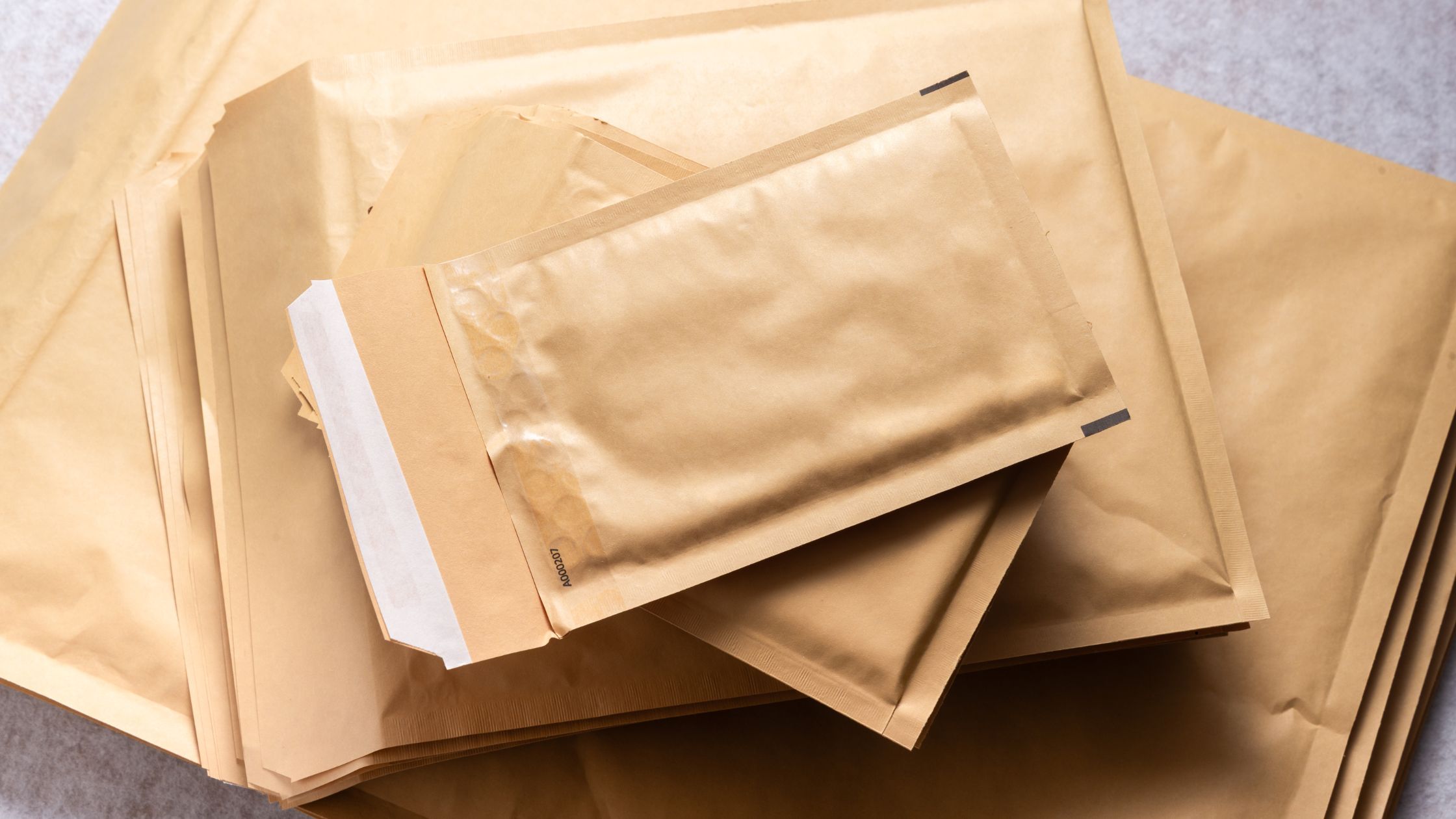
I’ll be honest with you — I spent my first year selling handmade ceramics on Etsy stuffing everything into whatever cardboard boxes I could scrounge from grocery store runs. Cereal boxes. Amazon returns. You name it. It worked until it really, really didn’t.
Here’s what nobody tells you when you start selling online: the thing you ship your product in matters almost as much as the product itself. Maybe more, depending on how fragile your stuff is. I learned that lesson after three crushed mugs, a one-star review, and a refund that stung for weeks.
At some point — and I wish it had been sooner — I sat down and actually thought about packaging as a choice, not just a chore. That’s when shipping envelopes entered the picture. Not for everything, obviously. But for a surprising number of items, I’d been wildly overpacking.
Choosing between a box and a flat mailer isn’t glamorous. Nobody starts a craft business because they’re excited about dimensional weight. But this one decision? It shapes your shipping costs, your margins, and your customers’ first physical impression of your brand. We at The Boxery get that — we’ve been helping small sellers figure this stuff out for over 25 years.
For way too long, the default was to grab the biggest box on the shelf and fill the gaps with packing peanuts. Wasteful. Expensive. And honestly, your customer on the other end is just annoyed, pulling foam bits out of their hair.
The right mailer does something a clunky oversized carton can’t: it tells the person opening it that you actually thought about them. That you measured. That you cared enough to match the package to the product. Lighter weight usually means faster transit, too — and who doesn’t want their order showing up a day earlier?
Less material is also just… better for the planet. I know that sounds like a bumper sticker, but it’s true. My customers — the ones buying handmade, choosing small business over mass-produced — they notice that stuff. They care.
Think of a padded mailer not as the lazy option. It’s actually the precise option. I used to wrestle with boxes three sizes too big for a pair of earrings, taping and re-taping, cursing under my breath. Now I grab a fitted envelope, and I’m done in ten seconds. The satisfaction is weirdly real.
By the time you finish reading this, you’ll know exactly when to reach for a mailer and when a box is still the right call. That kind of confidence? It changes how you run your whole packing station.
Key Takeaways
- The choice between a box and a mailer directly impacts your shipping costs and customer experience.
- Overpacking small items is a common habit that wastes money and materials.
- Using the right padded bag projects a professional image and can lead to faster delivery.
- Opting for a mailer is an environmentally friendly choice that reduces material use.
- This type of packaging is a strategic solution, not just a default option.
- Partnering with a knowledgeable supplier like The Boxery provides expert guidance for these decisions.
- Mastering this choice boosts your efficiency and enhances your brand’s perceived care.
The Strategic Advantages of Shipping Envelopes
What if your packaging could actually pull its weight — financially, I mean? Because mine sure wasn’t, back when I was spending $1.80 per box to ship a $14 bracelet. The math was killing me. Moving past the “everything goes in a box” mentality opened up savings I didn’t expect.
Flat mailers and padded pouches aren’t just cheaper per unit than corrugated cartons. That part’s nice, sure. But the bigger win is dimensional weight. Carriers like USPS, UPS, and FedEx charge you for the space a package takes up, not just what it weighs. A tiny pendant rattling around in a 10x10x10 box? You’re paying to ship air. A slim, fitted mailer? Way less.
And the time savings are sneaky-good. Sealing a mailer is one motion. Peel, press, done. Assembling a box, taping the bottom, adding void fill, taping the top, slapping on a label — that’s five steps minimum. When you’re packing forty orders on a Sunday night because you have a day job Monday morning, those minutes add up fast.
Storage is another thing nobody warns you about. I used to have a wall of flattened boxes in my spare bedroom that looked like some kind of cardboard art installation. Stacks of packaging mailers take up a fraction of that space. I actually have room for inventory now. Wild concept.
Then there’s the customer side. A well-chosen mailer feels intentional. It says you measured your product, picked the right protection, and didn’t just throw it in whatever was lying around. That matters. I’ve gotten compliments on my packaging — the packaging — which still makes me laugh, but it translates to repeat buyers and better reviews.
The sustainability angle is real, too. Less cardboard, less filler, less tape, less waste. My customers shop small because they believe in something, and showing up with minimal, thoughtful packaging reinforces that. It’s not greenwashing when you’re genuinely using fewer materials.
Protection isn’t sacrificed, either. I was skeptical at first — how can a flat pouch protect anything? But modern padded mailers have bubble cushioning that handles light impacts surprisingly well. Rigid corrugated versions prevent bending on flat goods. Poly options shrug off rain and rough handling.
There’s this outdated idea that mailers look cheap. That’s just not true anymore. A crisp kraft bubble mailer with a branded sticker looks better than a beaten-up box with tape everywhere. Premium materials and clean presentation go a long way. A custom-printed option can even function as a moving billboard for your brand.
The Boxery stocks the kind of reliable, high-quality solutions that make this shift feel effortless. They’ve been doing this for decades — more than a thousand box sizes, every mailer variety you can think of, and same-day shipping if you order before 4 p.m. EST. Having a supplier that actually understands small business operations is a game-changer.
Adopting the right mailer streamlines your costs, impresses customers, and tells a better story about your brand. It’s a small switch — literally — with an outsized impact on how your operation runs.
Key Situations Where Envelopes Outperform Boxes
Here’s where it gets practical. Instead of looking at your inventory and thinking “what box fits this?” — try asking “does this even need a box?” You’ll be surprised how often the answer is no.
I spent months boxing up jewelry orders in containers that could’ve held a toaster. Ridiculous, in hindsight. A lot of what we ship is perfectly suited for a sleek, secure mailer — and knowing when to make that call is the kind of operational savvy that separates scrambling from scaling.
Let me walk you through the situations where I’ve made the switch and never looked back.
Flat & Semi-Rigid Goods: Documents, magazines, art prints, signed contracts — anything that lies flat and doesn’t need three-dimensional protection. A flat kraft paper mailer handles these beautifully. Clean, professional, no wasted space.
For rigid flat items — hardcover books, board games, framed certificates, stacks of business cards — a corrugated mailer is the move. It’s got that stiff cardboard construction that resists bending and crushing without the bulk of assembling a full carton. I use these for my ceramic tile coasters, and they arrive flawless every time.
Small, Dense & Non-Fragile Items: Jewelry pouches, USB drives, keychains, small hand tools, phone cases. These things get swallowed by boxes. A fitted mailer holds them snug, eliminates the need for packing peanuts or crumpled paper, and presents the product as intentional — not an afterthought rattling around in empty space.
Soft Goods & Apparel: T-shirts, socks, scarves, lightweight fabrics — none of these need a rigid container. They need a secure pouch that keeps them clean during transit. For items like swimsuits or yoga wear that might sit in a damp mailbox during a rainstorm, shipping poly bags adds a waterproof layer of defense that paper simply can’t match.
Delicate & Sensitive Pieces: This is where people hesitate, and I get it. I make ceramics — I understand the fear. But for lightweight, delicate items — photos, DVDs, handmade ornaments, small craft components, earrings on cards — modern padded and bubble mailers offer genuine cushioning. The air-filled layer absorbs shocks. The slim profile dodges dimensional weight penalties. I still box my large pottery pieces, but for smaller, delicate goods? Padded mailers have earned my trust.
Long, Cylindrical Items: Posters, rolled artwork, architectural blueprints, fabric bolts. Mailing tubes exist for exactly this reason, and they’re way more efficient than trying to MacGyver a long rectangular box out of cardboard and prayers.
Not sure which direction to go? Run through this quick checklist for each product:
- Fragility: Breakable, or just scratch-sensitive? Light cushioning handles most scratch concerns.
- Dimensions: Flat? Long? Tiny? Match the shape to the mailer style — don’t force a square peg into a rectangular box.
- Environmental factors: Rain, humidity, rough handling? Go poly or coated.
Let me debunk something while we’re here: “sturdy” does not automatically mean “needs a box.” I believed that for too long. Modern mailer materials — rigid corrugated layers, bubble cushioning, tear-resistant poly — provide serious security for a wide range of products. Using a full carton for items that don’t need one is overkill. And overkill costs money you could be spending on better materials for your craft or, honestly, on yourself.
The Boxery carries the right option for every single one of these scenarios. They’re a one-stop shop — which matters when you’re already juggling product sourcing, customer service, photography, social media, and actually making the things you sell. Having one supplier that covers all your mailer packaging needs means one order, one delivery, one less thing on your plate.
Each item gets the precise level of protection it needs — nothing more, nothing less. That precision cuts costs and elevates the unboxing moment for your buyer. It tells them you thought through every detail. And in a market where anyone can sell anything online, those details are what set you apart.
Navigating Your Shipping Envelope Options at The Boxery
Knowing when to use a mailer is half the battle. Figuring out which mailer? That’s where it gets overwhelming if you’re doing it alone. There are so many options — padded, unpadded, poly, kraft, corrugated, bubble-lined — and they all look kind of similar in thumbnail photos.
This is where having a supplier who actually curates their selection matters. The Boxery doesn’t just dump thousands of SKUs on you and wish you luck. They’ve organized their range by protective need, so you can match your product to the right solution without a packaging engineering degree.
Think of them as your one-stop resource. Reliable inventory, fast shipping from multiple U.S. warehouses, and the kind of consistent quality that means you’re not gambling every time you reorder. Let me walk you through the main categories.
Padded & Bubble Mailers for Light Protection
That soft crinkle when you squeeze the package? That’s the bubble layer doing its job. These mailers wrap your item in a cushioned cocoon — lightweight but genuinely protective.
I use these for sunglasses, small electronics accessories, and my hand-painted ornaments. The interior bubble lining absorbs minor impacts and prevents surface scratches during transit. For sensitive handmade pieces that need a gentle buffer without the heft of a box, these are perfect.
Robust protection, minimal bulk. The self-sealing adhesive strip means you peel, press, and you’re done. No tape gun required. When you’re packing two dozen orders after dinner, that simplicity matters more than you’d think.
The Boxery carries both poly bubble mailers and kraft bubble versions under their LUX brand — the kraft ones have that natural, earthy look that pairs beautifully with handmade and artisan products. If your brand leans organic and authentic, the brown kraft exterior says the right thing before the customer even opens it.
Corrugated Mailers for Rigid, Flat Items
Need the structural integrity of a box without the assembly headache? Corrugated mailers are the answer. Stiff cardboard construction, fold-and-lock design, done.
These are my go-to for ceramic tile sets, framed mini prints, and important documents I ship to galleries. The rigidity prevents bending — your flat goods arrive perfectly pristine, not curled at the corners or creased down the middle.
It’s the satisfying sturdiness of a carton in a ready-to-use, space-saving format. No tape on the bottom. No fighting with flaps. They ship and store flat, which is a blessing when your “warehouse” is also your living room.
Photographs, certificates, restaurant menus, vinyl records, hardcover books — anything that needs to stay flat and unbent thrives in a corrugated mailer. The Boxery stocks these in a wide range of sizes, so you’re not forcing a 6×8 print into a 12×15 mailer and hoping for the best.
Flat Paper Mailers for Documents
Sometimes you just need clean, professional, no-frills. A crisp kraft paper envelope does exactly that.
Invoices, legal papers, holiday cards, small catalogs, marketing inserts — these don’t need cushioning or water resistance. They need a mailer that looks sharp and arrives without tears or wrinkles. That’s it.
I use flat paper mailers when I ship care instruction cards and thank-you notes with separate orders. The presentation is polished without being excessive. Your recipient — whether it’s a customer, a client, or a gallery owner — sees attention to detail.
Minimalist, versatile, cost-effective. It’s the kind of packaging that works quietly and well.
Poly Mailers for Weather and Abrasion Resistance
Rain happens. Snow happens. Packages get tossed onto wet porches and left in humid mailboxes. If your product can’t get wet or dirty, poly mailers are non-negotiable.
Picture this: a customer orders a hand-dyed silk scarf. It sits in their mailbox through an afternoon downpour. Inside a paper mailer? Disaster. Inside a poly mailer? Bone dry. That waterproof barrier is the difference between a five-star review and a refund request.
Poly material also resists abrasion — the scuffs and scrapes that happen when packages get shuffled through sorting facilities and delivery trucks. Clothing, fabric samples, and non-fragile accessories — these all travel better inside a durable poly shell. The Boxery’s LUX poly mailers come in white, black, blue, green, purple, and pink, so you can coordinate with your brand colors. Free shipping on all mailers, which is honestly one of those details that makes a real difference when you’re ordering regularly.
Choosing the right supplier is just as important as choosing the right product. Consistency matters — you need the same quality every time you reorder, not a gamble.
“Fast, excellent quality, and reliable.”
— Pam F., Verified Buyer, on custom envelope mailers delivery.
That feedback mirrors what The Boxery has been building for over two decades — a reputation for dependable quality and on-time delivery that small businesses can actually count on. Whether you’re packing a delicate gift or fulfilling a bulk wholesale order, they’ve got the solution. And honestly? Having one less thing to worry about is worth a lot when you’re running a business with your own two hands.
Making the Informed Choice for Your Shipments
The real mark of a well-run operation — whether it’s a spare-bedroom Etsy shop or a rented warehouse — is knowing exactly which pack to grab for every single item. Not guessing. Not defaulting to the biggest box because it’s what you have. Knowing.
A snug fit in the right mailer — padded for cushioning, corrugated for structure, poly for weather defense — often gives you better protection and a more polished presentation than an oversized carton stuffed with filler. I’ve watched my damage rate drop and my compliments on packaging go up since making the switch. And my shipping costs? Noticeably lower.
Here’s what I’d suggest: audit your most frequent shipments this week. Pick one product that’s currently going out in a box and ask yourself — could this travel just as safely in a mailer? Chances are, at least one item can. Start there. See what happens to your costs and your packing speed.
Explore the selection at The Boxery. They carry the reliable, high-quality packaging supplies your business deserves — and their team actually understands what it’s like to be a small seller figuring things out. You’re not just sending a product when you ship an order. You’re delivering an experience. Make it a good one.
FAQ
When should I choose a mailer over a corrugated box for my order?
Reach for a mailer when you’re shipping flat, flexible, or non-fragile items — documents, apparel, small accessories, jewelry on cards, soft goods. Basically, anything that doesn’t need the three-dimensional protection of a rigid container. Mailers cost less per unit and their slim profile keeps dimensional weight charges down, which adds up fast when you’re shipping regularly. They’re not a downgrade from boxes — they’re a different tool for a different job.
How much can I really save by using poly mailers or padded bags?
More than you’d expect. The material cost is lower, yes, but the real savings come from postage. Poly mailers and padded bags weigh almost nothing compared to corrugated cartons, and their flat profile means carriers charge you less in dimensional weight fees. Over dozens or hundreds of shipments per month, those per-package savings compound into real money — money that can go back into your products, your marketing, or honestly just paying yourself. Free shipping on mailers from suppliers like The Boxery sweetens the deal further.
Are bubble mailers safe enough for fragile items like jewelry?
For lightweight, moderately delicate items — absolutely. The air-filled bubble layer absorbs bumps and minor drops during transit. For extra security with pieces like earrings or pendants, tuck them into tissue paper or a small foam pouch inside the mailer to prevent shifting. I ship handmade ceramic jewelry this way and my damage rate is essentially zero. That said, for heavier fragile items — a large ceramic vase, for example — a corrugated box with proper cushioning is still the safer call. Match the protection to the weight and fragility, not just the size.
What’s the difference between a poly mailer and a kraft paper mailer?
Material and defense, mainly. Poly mailers are flexible plastic — waterproof, tear-resistant, and great against abrasion. They’re ideal for clothing, fabric, or anything that might encounter rain or rough handling. Kraft paper mailers have that natural brown look, they’re fully recyclable, and they make a strong visual statement for brands that lean into earthy, sustainable aesthetics. They’re excellent for documents, books, or marketing materials where presentation and eco-friendliness matter. If weather resistance is a concern, go poly. If brand feel and recyclability are priorities, go kraft.
Which mailer option at The Boxery is best for items that need to stay flat, like photos or certificates?
Corrugated mailers, hands down. The stiff cardboard construction resists bending and creasing during handling, so your photos, prints, certificates, or important papers arrive perfectly flat. They’re a massive upgrade from standard paper envelopes, which offer almost no protection against bending. The Boxery stocks these in multiple sizes — measure your item, pick the closest fit, and you’re set. Far more protection than a regular envelope, far less hassle than building a box.

Recent Comments